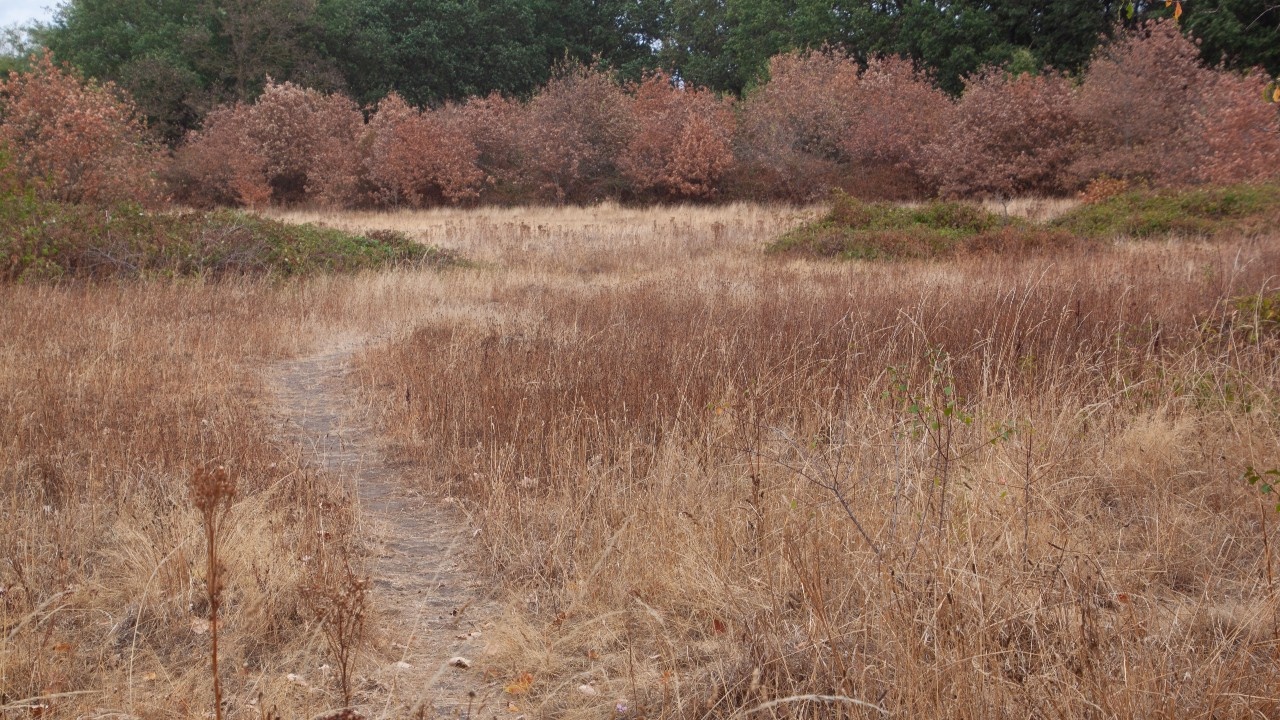
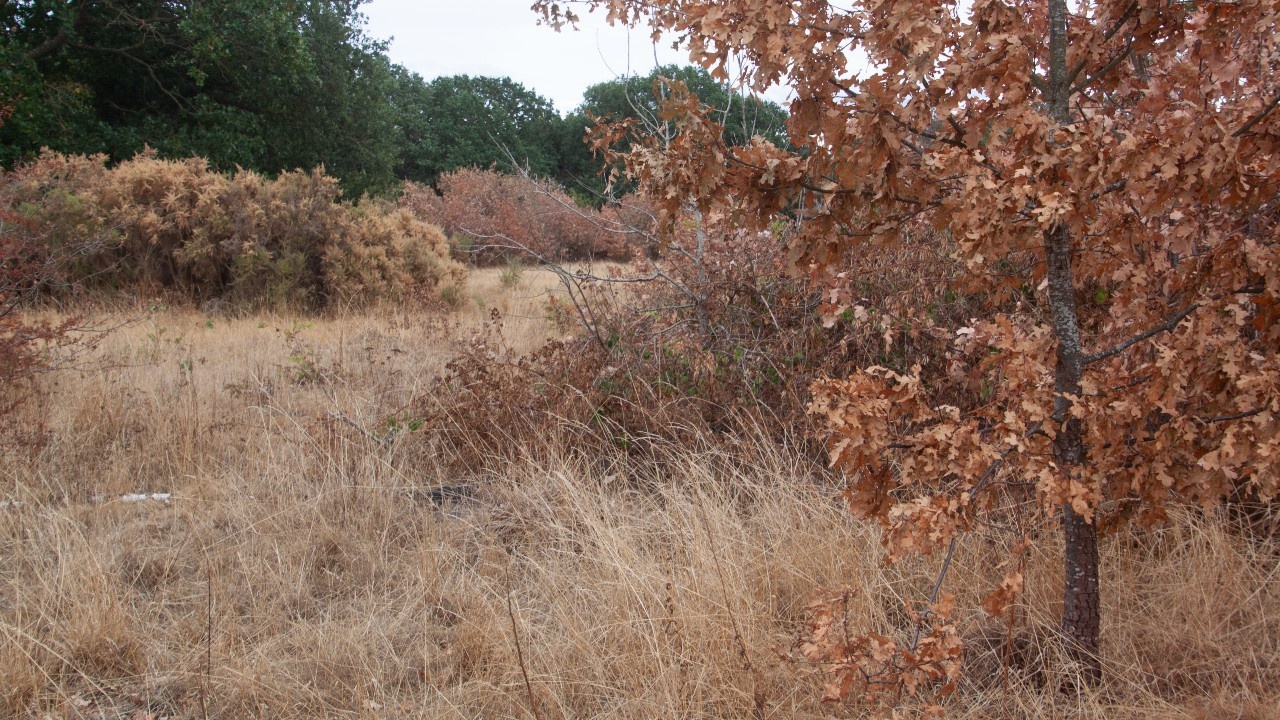
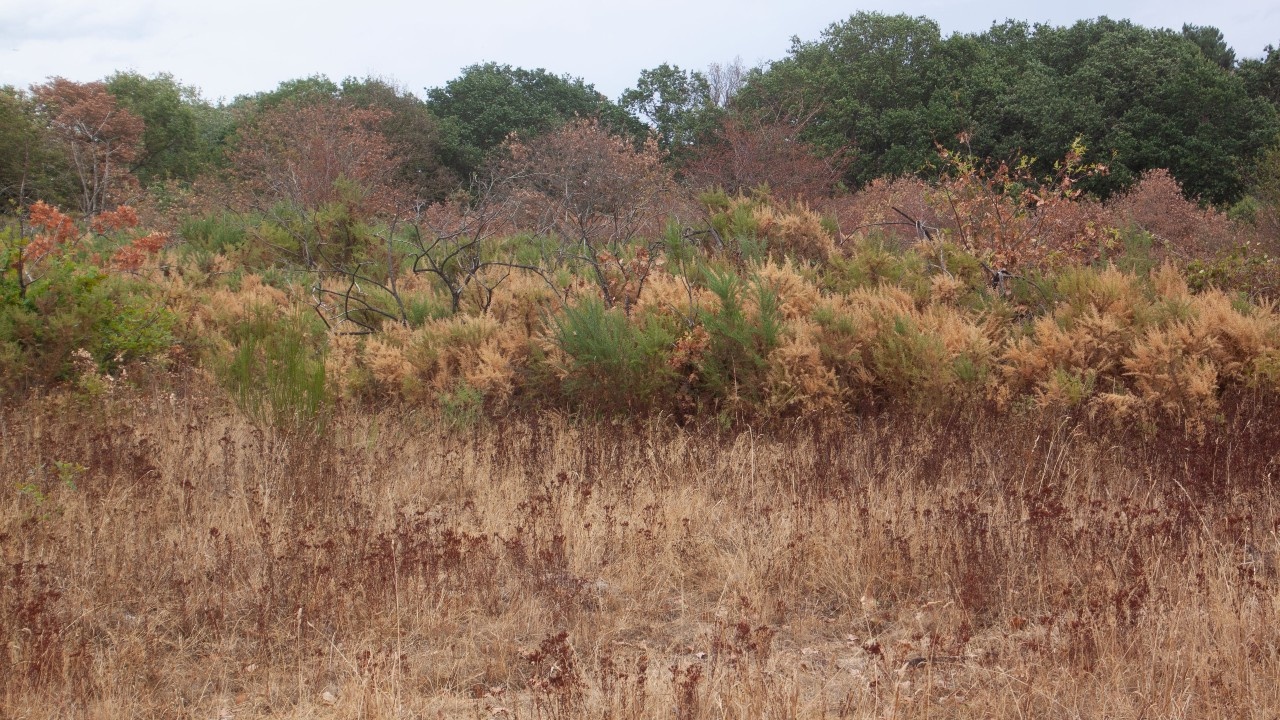
It's a huge relief, that we've got normal weather back. The ground is still very dry, and it will take a while for our grassland to recover, and quite a good proportion of trees will never recover. As described before, we're likely to lose at least a couple of large veteran oaks, the last mature birch, a lot of aspen and ash, and even the hawthorn has suffered badly. The risk of wildfire is still there, though much reduced.
We all owe a huge debt of gratitude for the extraordinary efforts by the volunteers of Hampton Heath Friends to keep last winter's planting alive over an exceptional, record-breaking summer of drought and heat. In truth, the start of this year's recovery was last year's planting: Thanks to relentless focus on watering, we still have many of our newly planted native hedgerow plants, including pines, cherry trees, sweet chestnut, and more. Importantly all five of our larger elm trees are thriving - an amazing feat - and great news for the future of the site.
The rain means watering has not been as "life essential" over the last week or so, and volunteer time has been spent on litter and frustratingly, some random fly-tipping - including items of furniture, basketry and a barbecue.
With a mostly dry week predicted, there is still watering to do, but we can also get on with other tasks - notably boosting that recovery.
Recovery starts with...
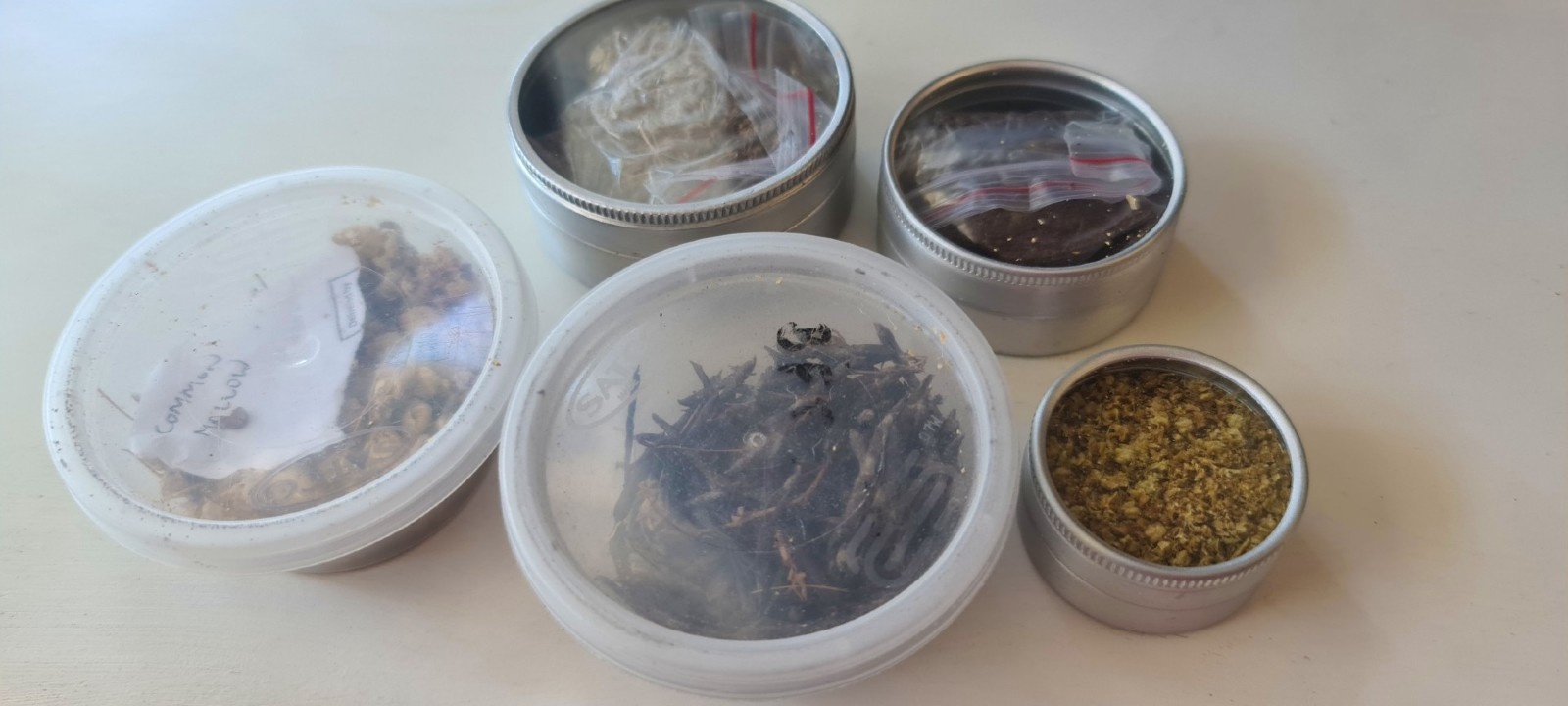
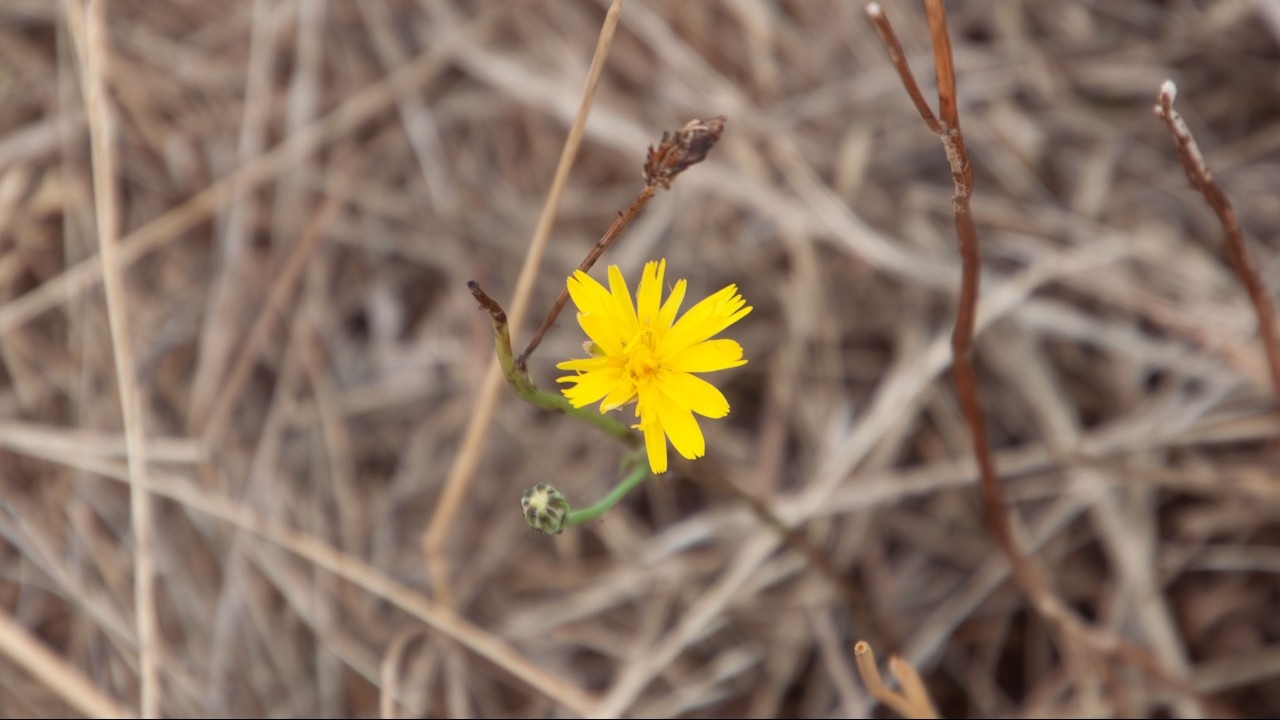
Wildflower seeding. Over the last few weeks I have visited several nearby wildlife sites in the Crane Valley and raided them for local, native, wildflower seeds. Seeds are collected - a few at a time - from several locations. This means there is always plenty of seed left for the donor site, and we get seed which is well adapted to local conditions, but with a degree of genetic variation - for resilience. The wildflowers selected are all very drought tolerant, and most are late flowering.
This week, we'll be scattering seed of:
Wild Carrot - this is super-resilient in droughts, continuing to flower even when the ragworts and yarrow have given up. This makes it really important for pollinators in drought conditions. I'll be collecting more seed for coming weeks.
Sheep's Sorrel - An indicator of acid grassland, and host to several specialist insects. It is already found on site, and the aim is to increase its distsribution.
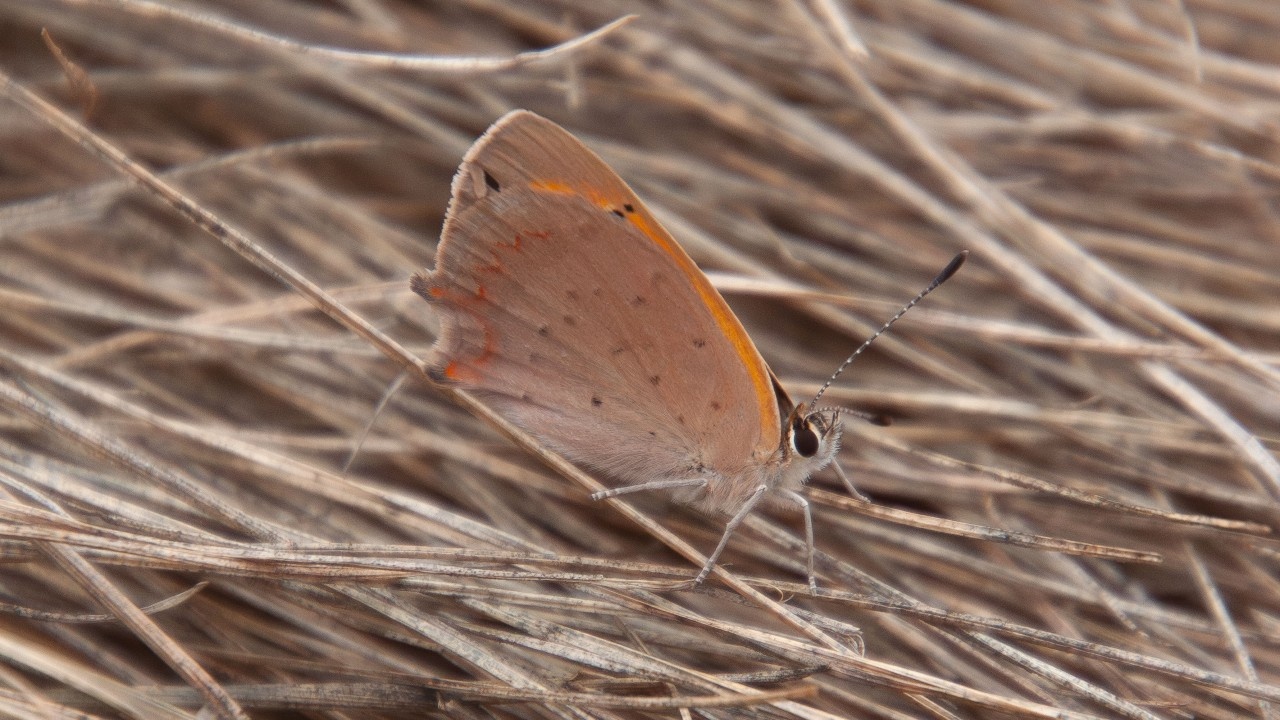
Birdsfoot Trefoil - Again already found across much of the site, the cheerful yellow flowers brighten up the summer, and leaves are food for blue butterflies and more.
Common Mallow - Another drought resistant species, which keeps on flowering, with attractive pale pink flowers, much loved by larger pollinators. I now grow this in my garden, it is so attractive.
Weld - Long spikes of yellow-cream-white flowers - a favourite of small pollinators most of us tend not to even notice.
There is more to come this autumn, with seed and planting prepared plants. We can all give nature recovery a helping hand.