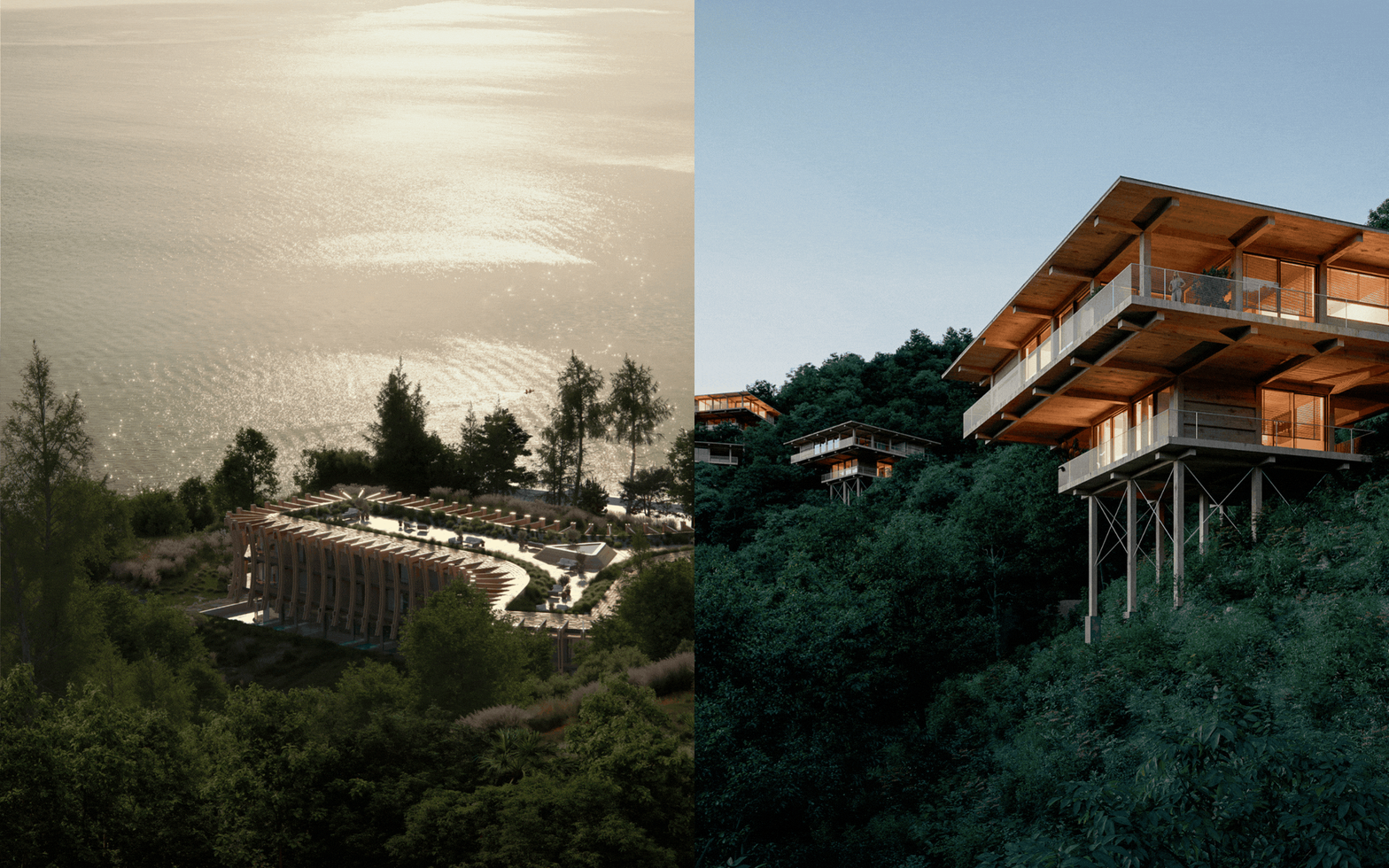
| | | One book, 33 voices, and fifteen years of architecture. |
|
|
|
| | |
|
|
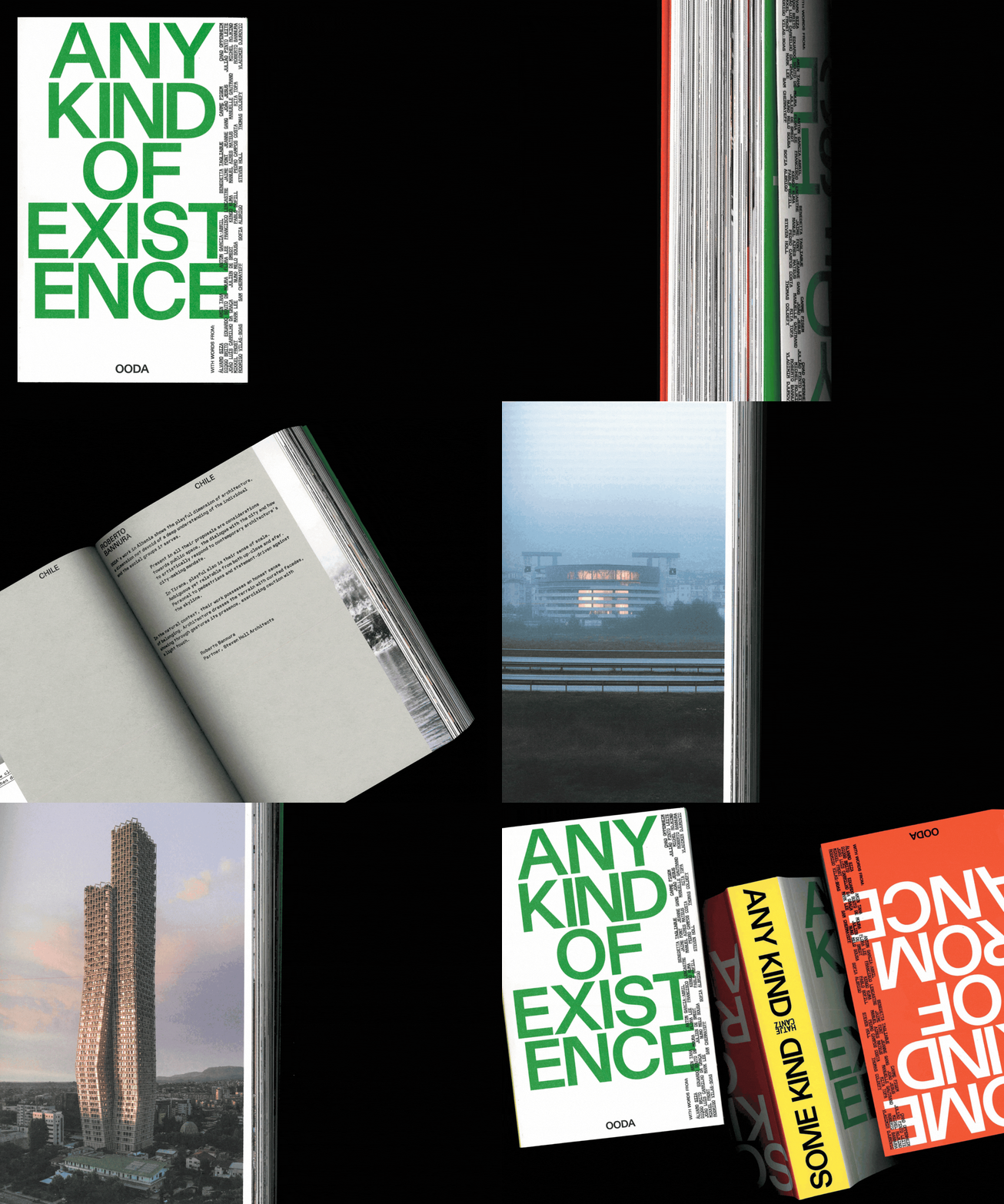
Fifteen years of architecture have found their way into a book. Projects, letters and fragments of memory move between what already exists and what is yet to come. Presented at Serralves this October, Some Kind of Romance, Any Kind of Existence brings together 33 voices, tracing a journey between architecture and literature, memory and projection. A few pages, then, on the work, the encounters and the stories behind it. |
|
|
|
A Book of Architecture Written as Romance |
| | | Some Kind of Romance, Any Kind of Existence approaches architecture as an open, bifurcated narrative, moving between architecture and literature, memory and projection, and two distinct experiences of place. Written by Ana Castanho, the publication takes the familiar form of an architectural monograph and opens it into a more immersive narrative, unfolding as a dream-state dialogue between two mirrored volumes. In Any Kind of Existence, the book explores persistence and care through an architecture shaped by time. Heritage appears as a living, layered condition, where repair, adaptation and continuity can become forms of transformation. Some Kind of Romance turns towards the experience of encountering a place in transformation. Beginning with an encounter with difference, the narrative develops through curiosity, risk and discovery towards a deeper sense of belonging. Projects unfold as acts within a larger narrative, while fragments of memory, observations, questions and reflections move between architecture and the places, encounters and experiences that give rise to them. |
| | | | | |
|
|
|
The Presentation at Serralves |
| | | |
|
|
| | |
|
|
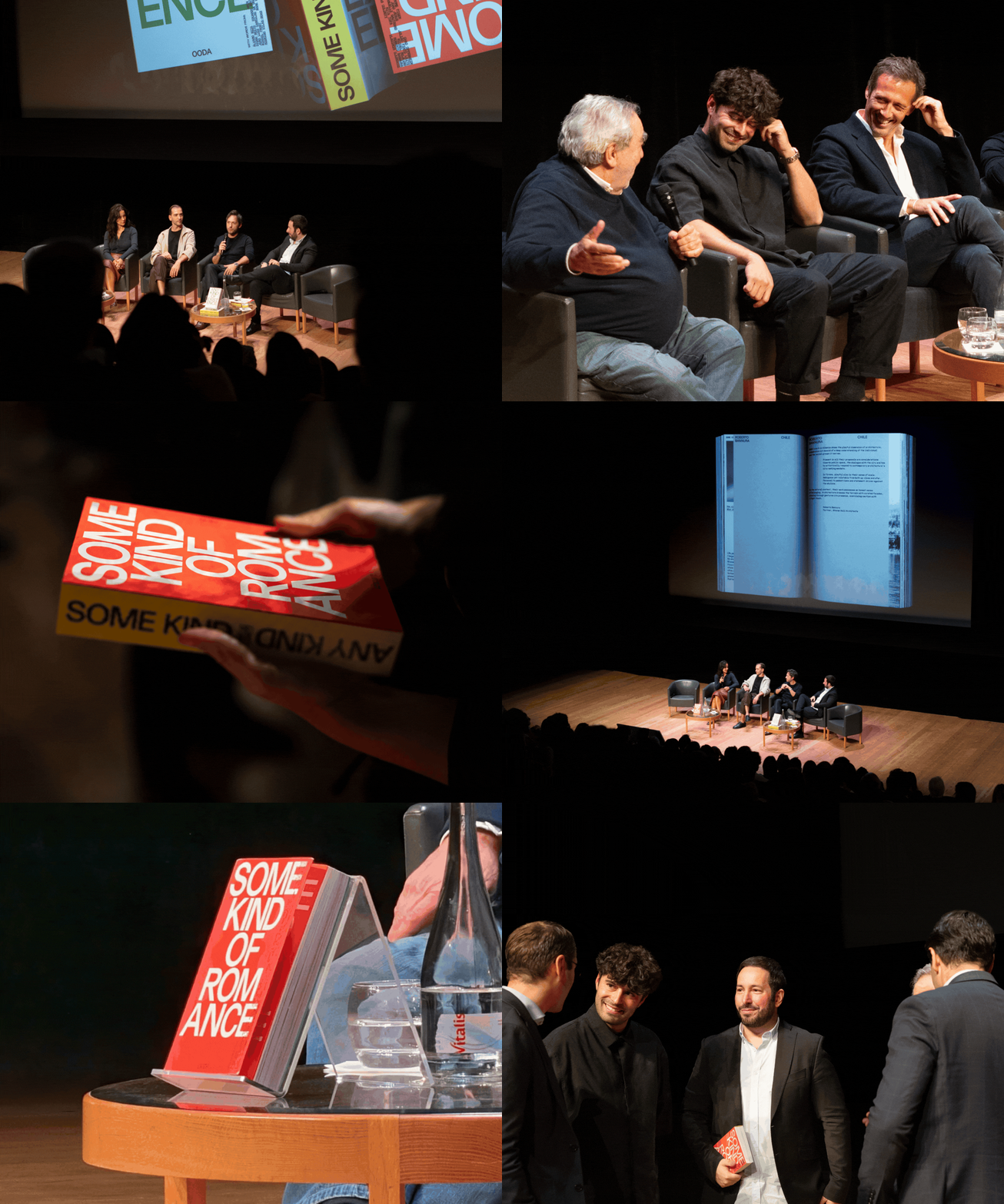
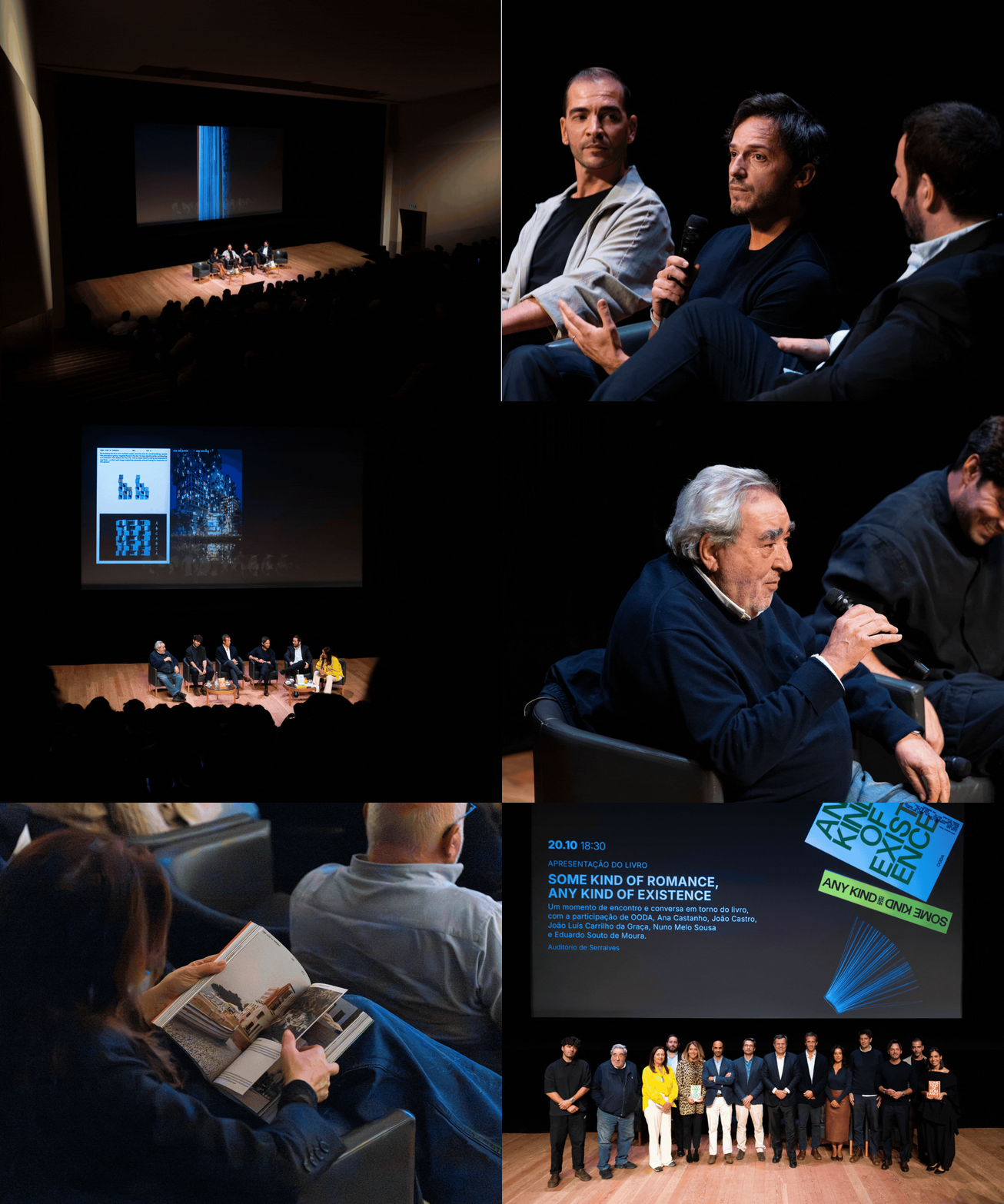
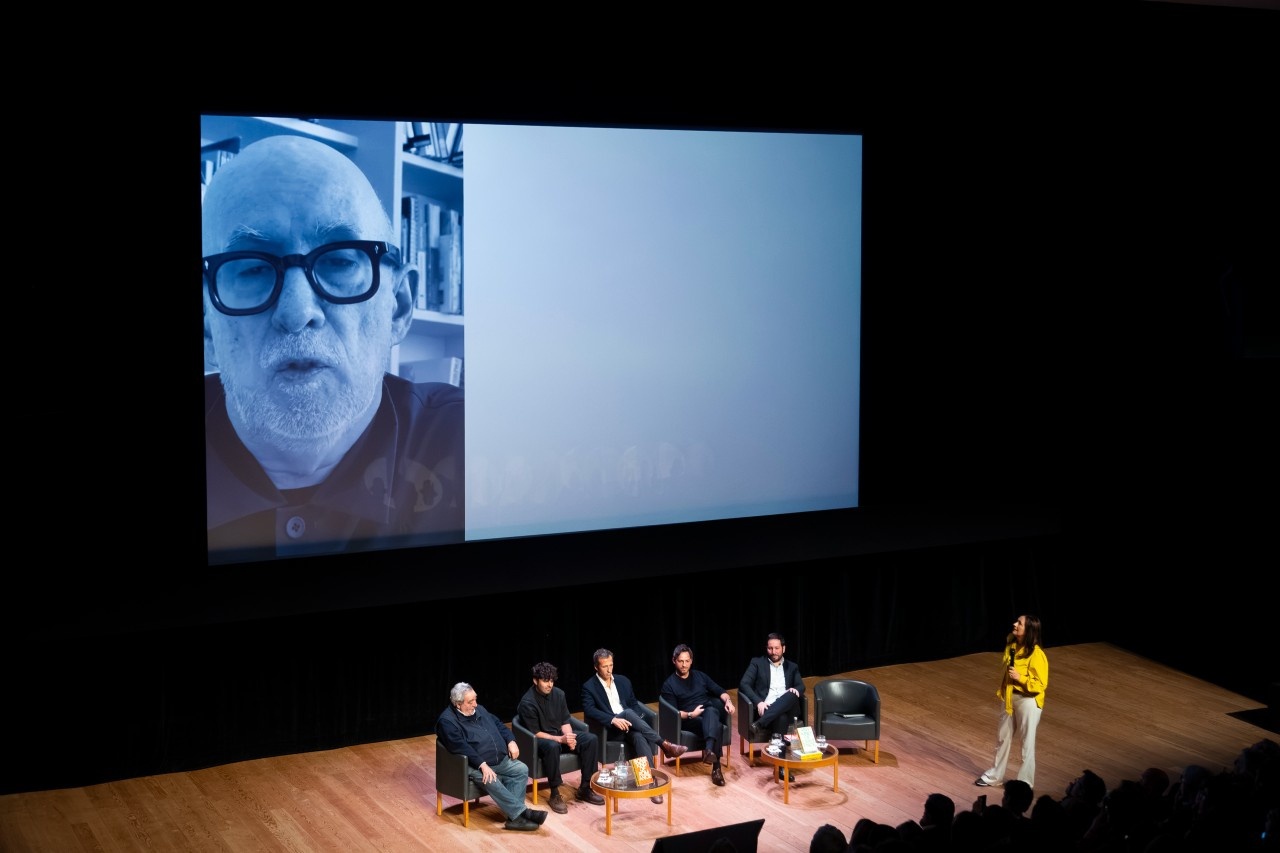
The presentation at Serralves featured Eduardo Souto de Moura, Nuno Melo Sousa, writer Ana Castanho and João Castro, alongside video contributions from João Luís Carrilho da Graça and Manuel Aires Mateus. The event was followed by a conversation between Diogo Brito and Rodrigo Vilas-Boas (OODA), Eduardo Souto de Moura, Nuno Melo Sousa and António Choupina, Director of Architecture at the Serralves Foundation, moderated by Fátima Campos Ferreira. The conversation explored different ways of practising architecture, drawing on the experiences and approaches of those involved to reflect on the future of the discipline. |
|
|
|
Photographs © António de Carvalho |
|
|
|
| | |
|
|
Eduardo Souto de Moura reflected on the act of designing as an exercise in constructing a fictional world. Starting from a blank sheet of paper, the architect must imagine a new reality for an existing place. This process, he argued, demands an effort of reduction, identifying what is essential and eliminating what surrounds it. As he observed during the conversation, “simplicity is the end result of great complexity.” The question of finding what is essential was also addressed by Nuno Melo Sousa, who drew on a Dinosaur Jr. song and the verse “forget the swan, a stone swims near” to reflect on the importance of identifying an underlying structure. He related this idea to architectural practice, pointing to rising construction costs and the increasing scarcity of skilled labour as conditions that demand a more streamlined approach to design. Looking beyond the design process, Eduardo Souto de Moura also reflected on the role of wars and revolutions in driving change, expressing his hope that the current period of turmoil in Europe might give rise to “a new cultural renaissance.”
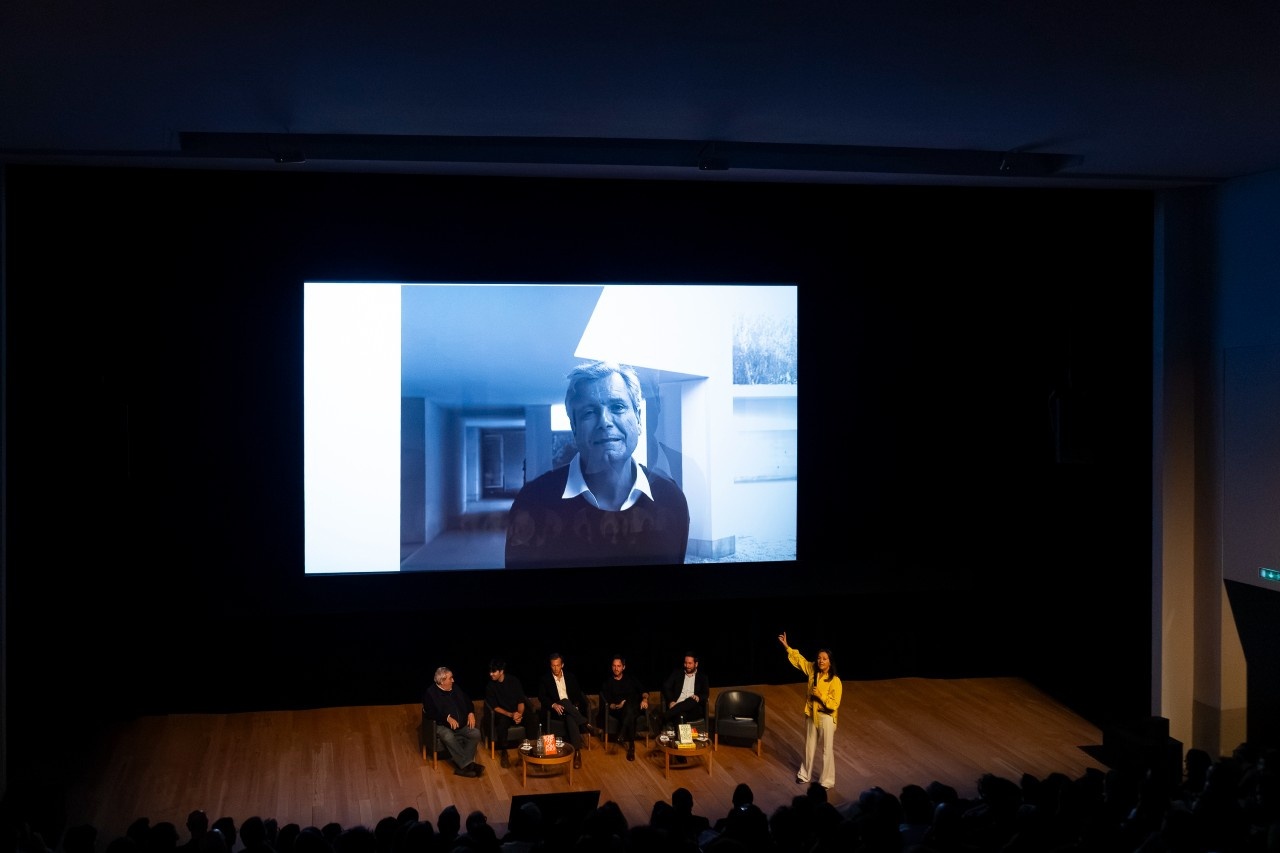
In his video contribution, Manuel Aires Mateus reflected on the publication and its capacity to inspire architectural practice, stating: “This book makes me want to work.” Together, these reflections extended the conversation beyond the projects themselves, returning to the questions of invention, transformation and continuity that run throughout Some Kind of Romance, Any Kind of Existence and OODA’s fifteen years of architectural practice. |
|
|
|
| | | Video contributions from João Luís Carrilho da Graça and Manuel Aires Mateus during the book presentation at Serralves, 20 October 2026. |
|
|
|
| | |
|
|
The Letters Behind OODA's New Book |
|
|
|
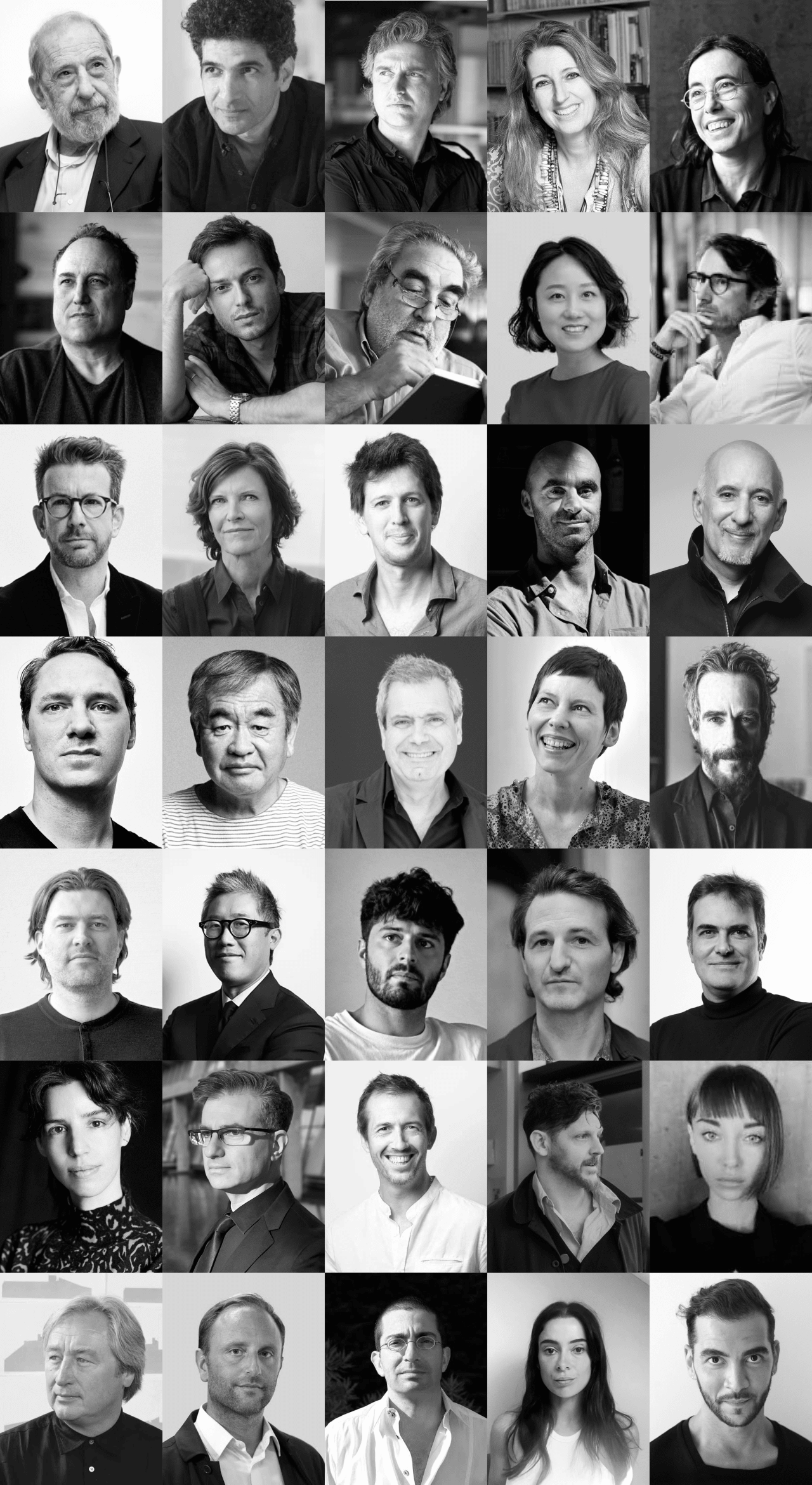
Almost thirty letters from architects and close collaborators form part of the publication, bringing a range of voices and perspectives into the book and opening its narrative to the relationships and encounters that have shaped the practice. Álvaro Siza, Amin Taha, Anton Garcia-Abril, Benedetta Tagliabue, Carme Pigem, Chad Oppenheim, Diogo Brito, Eduardo Souto de Moura, Flora Lee, Francisco Lencastre, Jaime Font, Jeanne Gang, João Jesus, João Luís Carrilho da Graça, Julião Pinto Leite, Julien De Smedt, Kengo Kuma, Manuel Aires Mateus, Manuelle Gautrand, Mark Lee, Michel Rojkind, Mikkel Frost, Nuno Melo Sousa, Pablo Bofill, Pedro Campos Costa, Rita Topa, Roberto Bannura, Rodrigo Vilas-Boas, Sam Chermayeff, Sofia Albrigo, Steven Holl, Thomas Coldefy, Vladimir Djurovic |
|
|
|
| | |
|
|
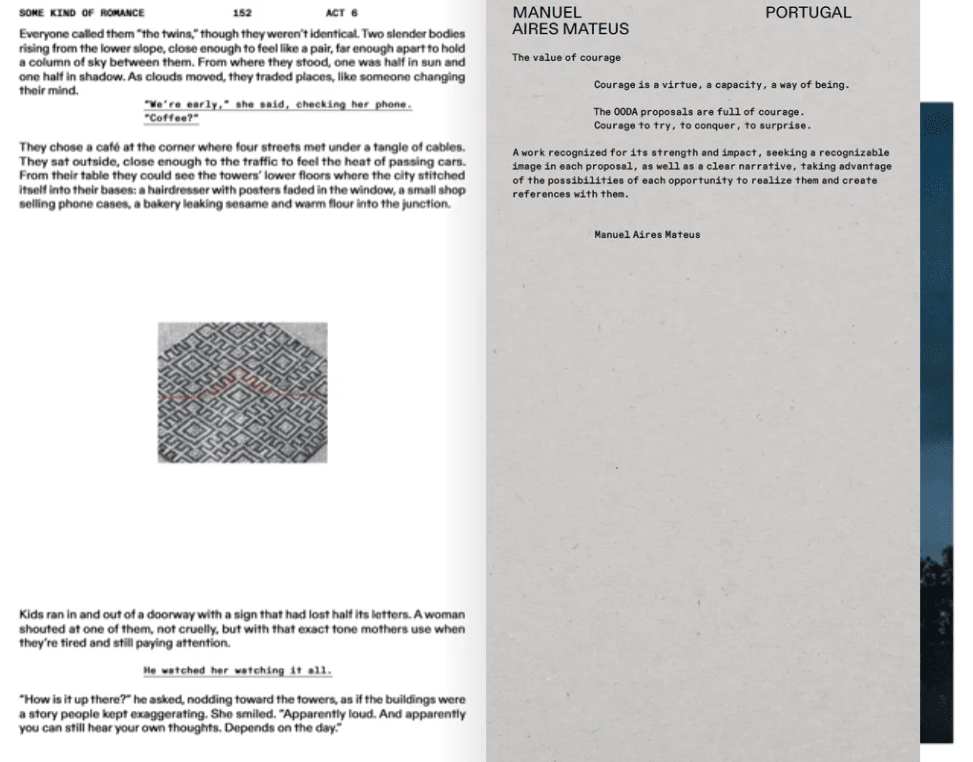
| | In his letter, entitled The Value of Courage, Manuel Aires Mateus writes: “OODA’s proposals are full of courage. The courage to try, to achieve, to surprise.” |
|
|
|
|
|
|
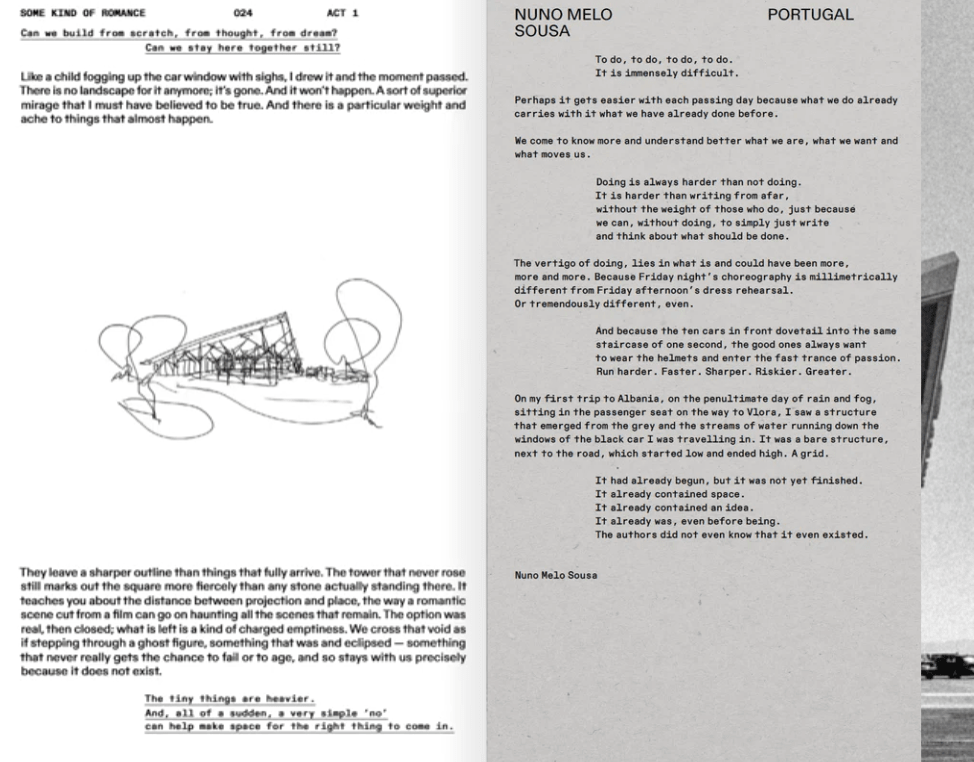
The relationship between ambition and the demands of architectural practice also emerges in Nuno Melo Sousa's contribution, which reflects on the act of making. |
|
|
|
Nuno Melo Sousa reflects on the act of making: “Doing is always more difficult than not doing. It is more difficult than writing from a distance, without the weight borne by those who do.” |
|
|
|
| | |
|
|
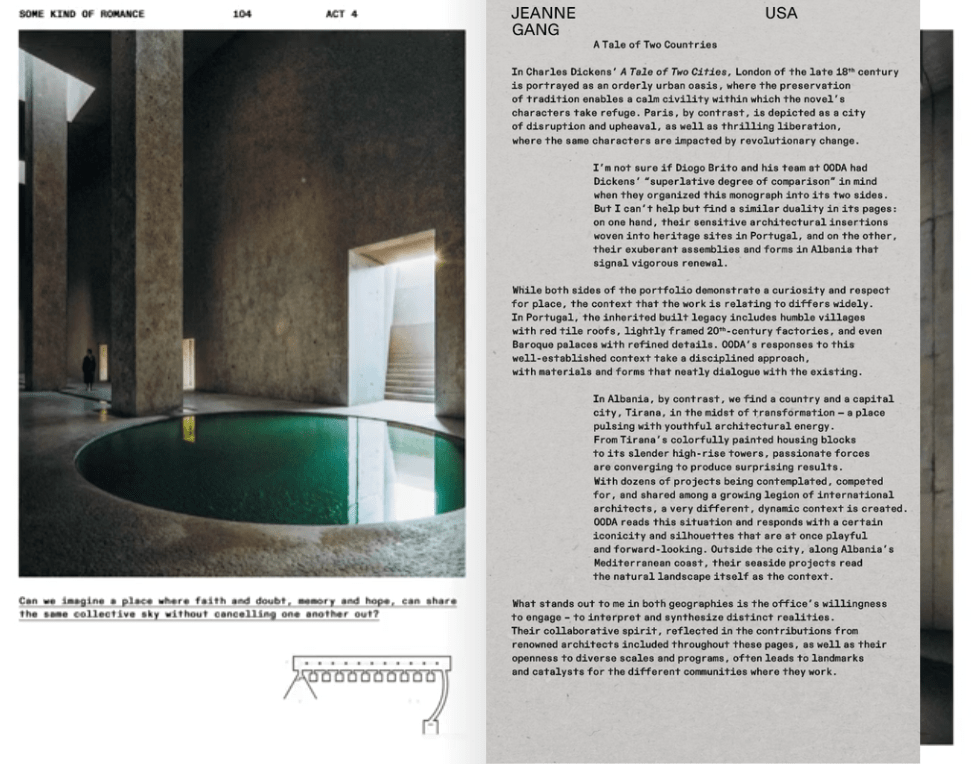
Jeanne Gang identifies a duality in the book's structure, drawing attention to the contrast between OODA's work in Portugal and Albania: “On the one hand, sensitive architectural interventions in heritage sites in Portugal; on the other, exuberant assemblages and forms in Albania, signalling a vigorous renewal.” |
|
|
|
Moving from this broader view of the practice to a particular project, Eduardo Souto de Moura writes about Miramar Tower: “perhaps the work that interests me most among the vast and varied catalogue of images that this studio has been publishing.” The letters bring personal perspectives into the publication, connecting architectural projects to the experiences, relationships and ideas around them. |
|
|
|
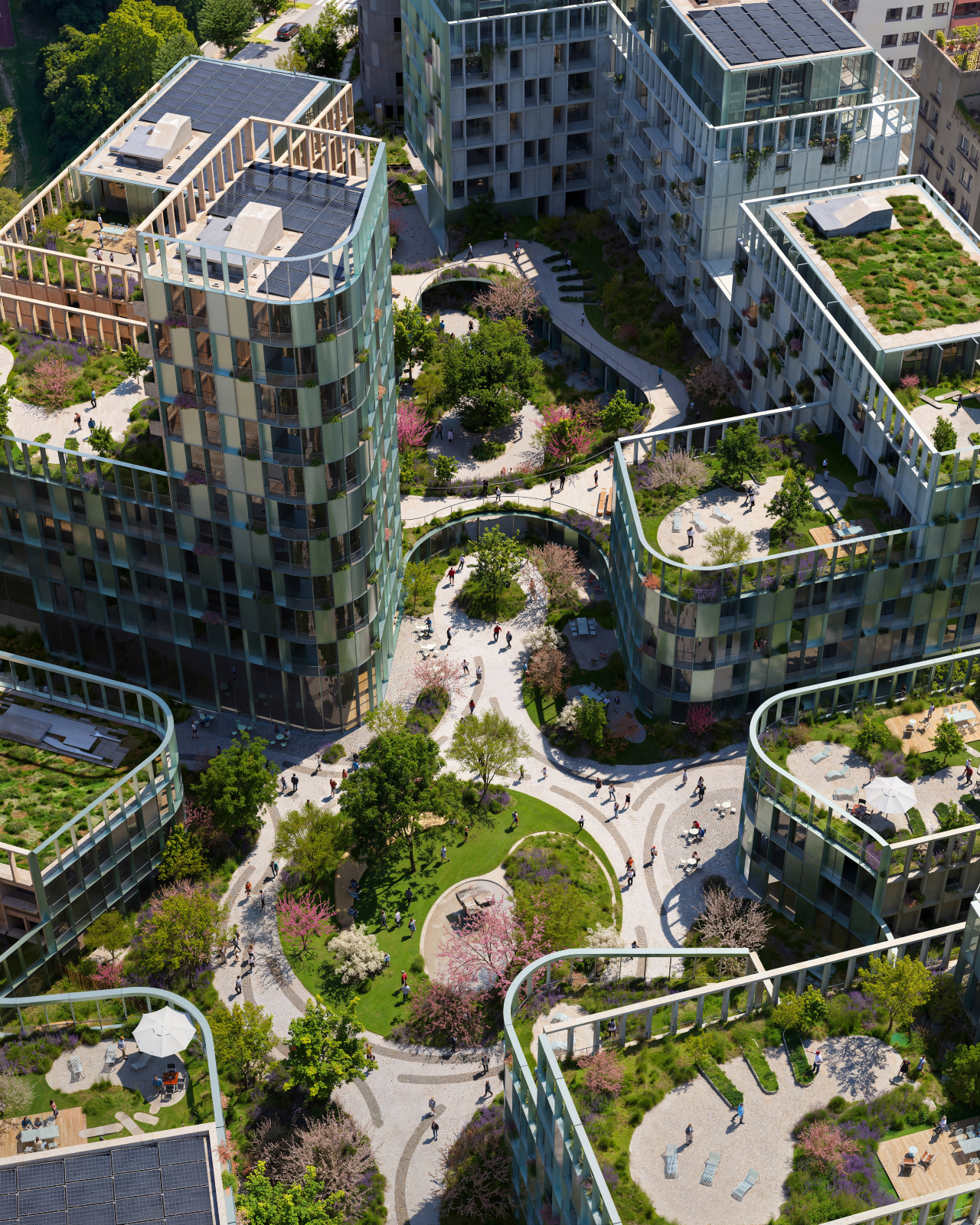
Kodanská 1441| Mixed-use / Residential / Infrastructure Prague, Czech Republic |
| | | |
|
|
| | |
|
|
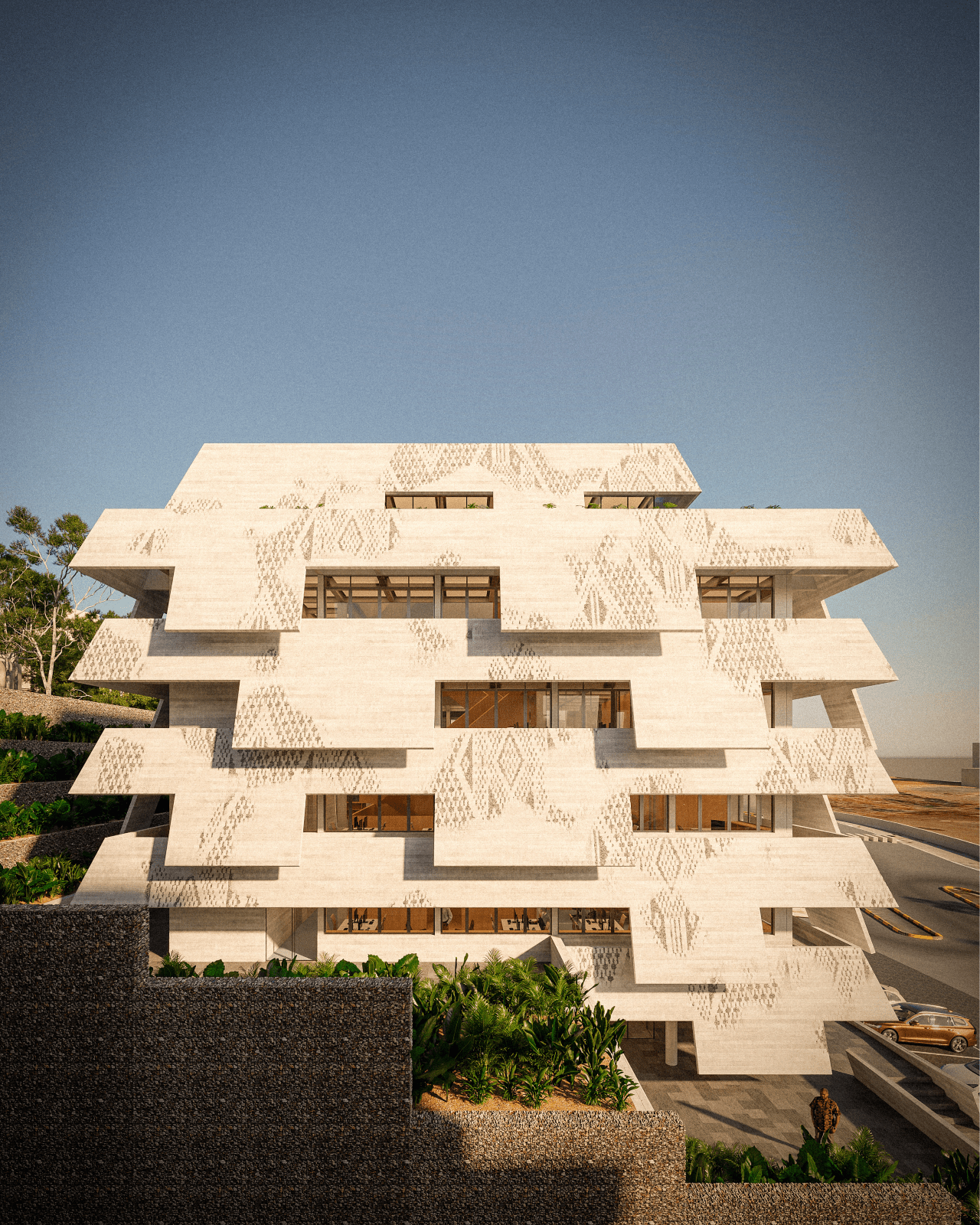
| | Téra| Office Praia, Cape Verde |
| | | |
|
|
|
|
|
Marvila Masterplan| Mixed-use / Masterplan Lisboa, Portugal |
| | | |
|
|
| | |
|
|
Thank you for reading this far. OODA |
|
|
|
Copyright © 2026 OODA Architecture. All rights reserved. You are receiving this email because you opted in via our website. Our mailing address is:
R. Conselheiro Costa Braga 318, 4450-102 Matosinhos, Portugal |
|
|
|
![]() |
|