͏‌ ͏‌ ͏‌ ͏‌ ͏‌ ͏‌ ͏‌ ͏‌ ͏‌ ͏‌ ͏‌ ͏‌ ͏‌ ͏‌ ͏‌ ͏‌ ͏‌ ͏‌ ͏‌ ͏‌ ͏‌ ͏‌ ͏‌ ͏‌ ͏‌ ͏‌ ͏‌ ͏‌ ͏‌ ͏‌ ͏‌ ͏‌ ͏‌ ͏‌ ͏‌ ͏‌ ͏‌ ͏‌ ͏‌ ͏‌ ͏‌ ͏‌ ͏‌ ͏‌ ͏‌ ͏‌ ͏‌ ͏‌ ͏‌ ͏‌ ͏‌ ͏‌ ͏‌ ͏‌ ͏‌ ͏‌ ͏‌ ͏‌ ͏‌ ͏‌ ͏‌ ͏‌ ͏‌ ͏‌ ͏‌ ͏‌ ͏‌ ͏‌ ͏‌ ͏‌ ͏‌ ͏‌ ͏‌ ͏‌ ͏‌ ͏‌ 
Is this email not displaying correctly? View it in your browser.
Image description
Image description
Image description

                           Demeter Newsletter -- August 2026


Greetings from Demeter!

In this issue:  

+ Certification News - Gratitude

+ Biodynamic Directory Spotlight - Livestock Products

+ Standards Feature - Wine Labeling

+ Biodynamic Opportunities

+ Staff Corner: Demetria Stephens - Peppering

+ Gauging Interest in Pelletized Chicken Manure

+ Demeter Calendar 


Please send newsletter content suggestions or 

questions to:   [email protected]

Image description

Certification News


A Season of Dedication and Gratitude

As August comes gently to a close, our team of dedicated Biodynamic inspectors is hard at work completing inspections and thoughtfully preparing reports for submission to the Demeter office. At the same time, our Certification Specialists are carefully reviewing each report as it arrives, giving every detail the time and attention it deserves.


Here in the office, we gather as a team each Wednesday to share our insights, ask questions, and collaborate on the work before us. These conversations are an important part of our process, allowing us to learn from one another and thoughtfully consider the best decisions for each of the clients we are honored to serve.


When a Findings Report arrives in your inbox, it may come from one Certification Specialist, but please know that there is a whole team of caring people behind that decision. Each report represents many hours of careful review, thoughtful discussion, and a shared commitment to the integrity of Biodynamic® certification.


The work of reviewing these reports will carry our team through the winter and into early spring of the coming year. While it is a long and sometimes demanding season, we are deeply grateful for the opportunity to do this work.


It is a privilege to play our part in the greater Biodynamic movement—to support the people who steward the land, honor the living systems of the farm, and carry this beautiful work forward. We are grateful for every grower, farmer, vintner, and steward who invites us to walk alongside them in this journey.


With appreciation and warmth,
The Demeter Certification Team


If you have any questions about the certification process, please don't hesitate to reach out to Sarah Rhynalds at [email protected].


Image description

We’re excited to share a new section in our newsletter dedicated to highlighting the farmers and processors who bring Biodynamic® products to life. Demeter's online Biodynamic Directory is a tool for both producers and consumers.   We hope this newsletter feature will serve to deepen the connection between consumers and the Biodynamic products they love and trust.

Image description

Biodynamic Directory

Spotlight

~ Livestock Products ~

--------

Image description
Image description

Hawthorne

Valley Farm

& Creamery

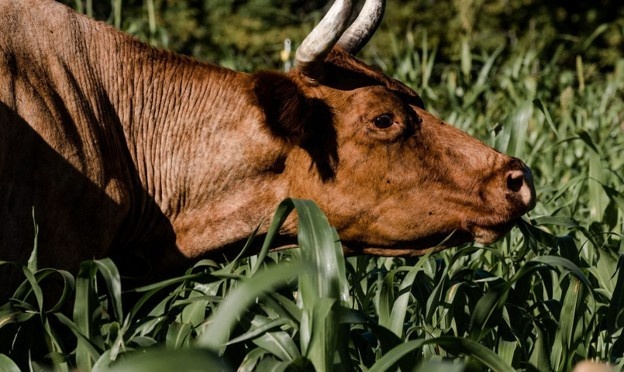
Hawthorne Valley Farm, located in Ghent, NY, features a Biodynamic® creamery and crafts Demeter-certified yogurt, cheese, and milk from a mixed-breed grass-fed dairy herd.  They describe Biodynamic farming as, “ a holistic approach that goes beyond sustainability to actively restore the health of the land…. By integrating plants, animals, and people into a unified whole, we care for the earth as a living organism.”


Hawthorne Valley’s creamery products are available at the farm in the Hudson Valley, at NYC Greenmarkets, and at natural food stores throughout the region.


Contact:

518-672-7500

Contact Form


Website: Hawthorne Valley Farm

Kimberton Hills Dairy

Image description
Image description

Located in Kimberton, PA, Kimberton Hills Dairy Farm manages a Biodynamic® dairy herd on 250 acres of pastureland.   Their mixed-breed herd is raised naturally, with calves remaining with their moms through weaning.  They write, “Biodynamic agriculture involves specific practices aimed at improving soil fertility, plant vitality and livestock care within a unified ecological framework. It can be seen as a quest for a balance between the production system and its environment.”


 Kimberton’s grass-fed milk is certified by Demeter and is available at their farm store and at regional stores.   They also make artisanal raw milk cheeses.


Contact:

(610) 935-0314

Contact Form


Online Store: Shop — Kimberton Hills Dairy


Image description
Image description

Seven Stars Farm

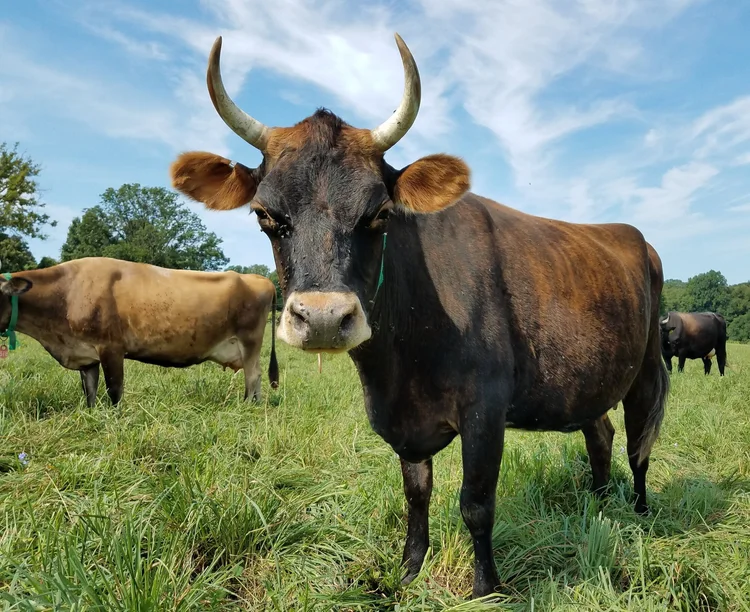
Seven Stars Farm, located in Phoenixville, PA, includes 420 acres of certified Biodynamic® crop and pastureland for their herd of Jersey cows.   The milk from the Demeter-certified dairy herd goes into making their well-known line of yogurts, milk, and heavy whipping cream.  While their dairy products aren’t certified by Demeter and may include some milk gathered from regional organic dairies, their dairy herd meets all of the Biodynamic® standards for raising livestock.  They note that, “Instead of using antibiotics and growth hormones, we maintain a healthy herd by using homeopathic remedies and herbal tinctures. We have found this natural way of combating disease to be remarkably effective!”


Seven Stars yogurt and other dairy products can be found at their farm store and at stores throughout most of the eastern United States and some parts of the mid-west. 


Contact:

610-935-1949

Contact Form


Online Store: Our Farm Store - Seven Stars Farm

Image description

Get ready for our upcoming

Biodynamic Directory Features!

September Newsletter -- East Coast and Midwest Wineries


🌲🌲🌲Christmas Shopping Options in October and November! 🌲🌲🌲

If you have Biodynamic gifts you'd like to feature, please get in touch!

Does your business produce any products in these categories?  Please email us at [email protected] for details on how to be included.

Image description


Demeter Standards Feature


Links to the Demeter Farm and Processing Standards can be found on our website's home page: Demeter USA Farm and Processing Standards


Understanding the differences -

Biodynamic® Wine and Wine Made With Biodynamic® Grapes


Biodynamic® Wine: What Makes It Different?


The creation of a certified Biodynamic® wine goes beyond simply using Biodynamic grapes. It follows a more intentional approach to both farming and winemaking, with an emphasis on working in harmony with natural cycles and minimizing intervention in the cellar.


What Defines Biodynamic® Wine?

Biodynamic® wine is made from 100% Biodynamic® grapes, sourced from a single estate and vintage. The winemaking process follows specific standards designed to preserve the character of the vineyard and the fruit.


Key practices include:

  • No added yeasts are permitted, although yeast nutrients are allowed.

  • No acid or sugar adjustments are permitted.

  • Enzymes are not allowed.

  • Organic eggs and milk may be used for tannin fining.

  • Sulfites are permitted up to 100 ppm.

  • Observing a Biodynamic® Calendar is encouraged.

  • Hand harvesting is preferred.

The philosophy is simple: allow the vineyard and the naturally occurring characteristics of the grapes to play the leading role, while limiting additions and manipulation during winemaking.


“Made with Biodynamic® Grapes” Wine

The Biodynamic® Processing Standard includes a second wine certification category: Made with Biodynamic® Grapes Wine.  There are important differences between Biodynamic® wine and Made with Biodynamic® Grapes Wine.


Wine in this category must be made with 100% Biodynamic® grapes and meet the USDA National Organic Program (NOP) requirements for “Made with Organic Grapes” labeling. Additionally, agricultural additives and processing aids—such as eggs, milk, and sweeteners—must be certified organic at a minimum, and sulfite use is limited to 100 ppm.


How Is It Different?

Unlike Biodynamic® wine, “Made with Biodynamic® Grapes” wine allows a broader range of winemaking practices. For example:

  • Added yeast is permitted, with organic yeast used when available.

  • Acid and sugar adjustments are allowed.

  • Enzymes are permitted.

  • Non-agricultural processing aids allowed under the NOP “Made with Organic Grapes” category may be used.

Why Does It Matter?

The difference comes down to how much intervention is permitted once the grapes reach the cellar. Both approaches begin with Biodynamic® grapes, but the Standard for Biodynamic® Wine strictly limits the manipulations possible in the winery.


For wine lovers, understanding these distinctions can provide a better appreciation for what is in the bottle— a wine that reflects the vineyard, the vintage, and the natural expression of the fruit or a wine that has a foundation in the vineyard with the creative influence of the winemaker.


Image description

Opportunities for Biodynamic Growers


Submit Your Preparations for Analysis


Demeter USA & Cure Soil National Bioassay Study

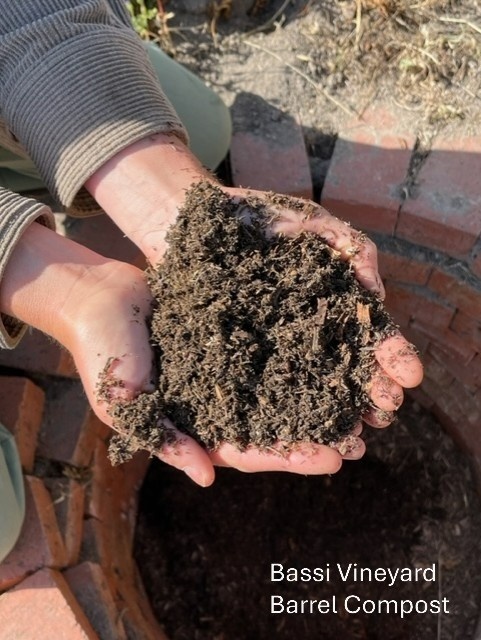
Demeter USA and Cure Soil are partnering, with support from the Biodynamic Association, to conduct a national microscopy bioassay study of BD 500/Prepared 500 and Barrel Compost. For the first time, we will be able to quantify the living biology inside these preparations: bacterial biomass, fungal communities, nematodes, and more. This research gives the biodynamic community scientific language to describe what has been known experientially for over a century. 


Ian Hunter, Cure Soil founder, brings 25 years of experience in soil biology and will be conducting bioassays at his lab in Marin County, California.  We currently have 14 samples coming in from Oregon, Colorado, Wisconsin, Maine, Tennessee, and Virginia. Results will be published and made available as the study develops.


If you wish to submit samples, please contact [email protected]


------------------------------

Interested in a Future Biodynamic Training?


A biodynamic group based in Upstate New York is gauging interest in a new biodynamic training.  This course is going to be student-designed and mentored by experienced biodynamic farmers. Offerings include in-person and hands-on learning, exploring how to implement biodynamic practices into a viable farm operation, building personal relationships with the processes at work in nature, and developing a living understanding of Rudolf Steiner’s Agriculture Course and anthroposophy as a whole. For ages 21-35, taught in English.


We are in the beginning stages of development and are gauging interest.  If you are interested in learning more about this initiative, please reach out:


[email protected]

518-965-6748


Image description

- Staff Corner -


Demetria Stephens

Certification Specialist

Visiting Churchtown Dairy with Jennie and Jean-David.

Exploring Peppering for Pest Control


The Biodynamic preparations standards mostly address increasing fertility in crops. The standards do not address controls that Rudolf Steiner proposed in his Agriculture Lecture 6 called peppers, or ashing, which is the process of creating an ash of the pest you are trying to combat and spreading it in the area as a repellant.


In the century since the lectures were delivered, Biodynamic practitioners have been experimenting with and advancing the use of peppering to control pests and weeds, using such works as Maria Thun's Biodynamic Almanac, Hugh Courtney's writings in the Josephine Porter Institute's Applied Biodynamics issues 27 and 28, and Hugh Lovel's Quantum Agriculture blog, including an entry on Peppering: Controlling Weeds and Pests. 


In the coming months, I'll be conducting interviews with people who are experimenting with peppering.  I will share the results in a future issue of this newsletter.  I was inspired to take on this topic because I have red flour beetles eating my wheat seeds and bindweed overpopulating my fields and I am looking for solutions.  It saddens me as an organic inspector to hear that farmers are quitting certification due to these issues in grain production. They conclude that their only chance to control these pests is to use synthetic pesticides. My goal in gathering information on alternative methods will be to inspire those experiencing these issues to explore other options, and in so doing, also introduce them to the benefits of the Biodynamic preparations


I've started talking to pepper makers individually, and I'm hoping people from around the world will join me at the Experimental Spaces to Deepen Biodynamics Study Group , hosted online by the Goetheanum Section for Agriculture, starting September 7, 2026 and continuing each week during the fall.


Please help me pull together the latest information on peppering from around the world by registering for my experimental spaces slot September 21 at 5 a.m., PDT, or contact me individually to share your stories or suggest questions I should ask practitioners.

Image description
Image description

Gauging Interest:

Pelletized Chicken Manure for Biodynamic Production


We are exploring a potential source of pelletized organic chicken manure, to be manufactured at a facility in Oregon. The end product would meet the Demeter standard for fertility inputs.


If you are a farmer on the West Coast and you are interested in this project, please complete the survey linked here.

Image description

Notes from the Field...

We are reserving a spot in each of our newsletters to feature a farmer or other certified business owner. If you'd like to write a brief article about your experience with Biodynamic Production, Processing, or Marketing, or answer some interview questions about your operation, we'd love to share it with our readers!


Please contact Nell at [email protected] for more details.

Image description
Image description


~ CALENDAR ~


If you'd like your event announced in our monthly newsletter, please send details to:

[email protected]

▪▪▪▪▪▪▪▪▪▪▪▪▪▪▪▪▪▪▪▪▪▪▪▪▪▪▪▪▪▪▪▪▪▪▪▪


Practical Biodynamics - Farmers and Gardeners' Forum

September 1st and October 6th

Online discussion

For Details:  Practical Biodynamics: Farmer and Gardener's Forum 


▪▪▪▪▪▪▪▪▪▪▪▪▪▪▪▪▪▪▪▪▪▪▪▪▪▪▪▪▪▪▪▪▪▪▪▪


Foundations of Biodynamic Agriculture

Year-long Training

Begins September 12th

Schedule and Registration: School for Spiritual Agriculture


▪▪▪▪▪▪▪▪▪▪▪▪▪▪▪▪▪▪▪▪▪▪▪▪▪▪▪▪▪▪▪▪▪▪▪▪


Oregon State University Organic Vegetables Field Day

September 14th

Corvallis, OR

To register:  Field Day


▪▪▪▪▪▪▪▪▪▪▪▪▪▪▪▪▪▪▪▪▪▪▪▪▪▪▪▪▪▪▪▪▪▪▪▪


Pfeiffer Center Practical Training in Biodynamics 2026/27

Eleven full-day Workshops September through June

Begins September 19th

Schedule and Registration: Pfeiffer Center Training


▪▪▪▪▪▪▪▪▪▪▪▪▪▪▪▪▪▪▪▪▪▪▪▪▪▪▪▪▪▪▪▪▪▪▪▪


Learning From the Bees Conference

September 25th - 27th

Spikenard Honeybee Sanctuary, Floyd, VA

To register:  Learning from the Bees


▪▪▪▪▪▪▪▪▪▪▪▪▪▪▪▪▪▪▪▪▪▪▪▪▪▪▪▪▪▪▪▪▪▪▪▪


BDANC 40th Autumn Gathering

September 26th - 27th

Sonoma County, CA - Three Springs Community Farm

To register:  Nourishment from the Earth


▪▪▪▪▪▪▪▪▪▪▪▪▪▪▪▪▪▪▪▪▪▪▪▪▪▪▪▪▪▪▪▪▪▪▪▪


You can find more events on the Biodynamic Association's

Event Calendar:

BDA Community Calendar


▪▪▪▪▪▪▪▪▪▪▪▪▪▪▪▪▪▪▪▪▪▪▪▪▪▪▪▪▪▪▪▪▪▪▪▪


Demeter Business Meetings:

Demeter Standard Committee – meets the 2nd and 4th Tuesday of the month

Demeter Board – meets the 3rd Monday of the month

Image description

Demeter Association, Inc.

317 Church Street
Phoenixville, PA 19460


www.demeter-usa.org

Facebook: Demeter USA    Instagram: demeter_usa

If you would like to unsubscribe, please click here.
Powered by Sender.net