Please join October webinar!

| | Alliance for Vulnerable Mission Bulletin October 2026 Volume 18, Number 10 |
|
|
| |
| |
|
| | Archived back-copies here. Subscribe for free here. |
|
|
| |
| |
|
| | The Alliance for Vulnerable Mission encourages some missionaries from the West to engage in their ministries using local languages and resources. |
|
|
| |
| |
|
| | Webinar: Two weeks left to register |
|
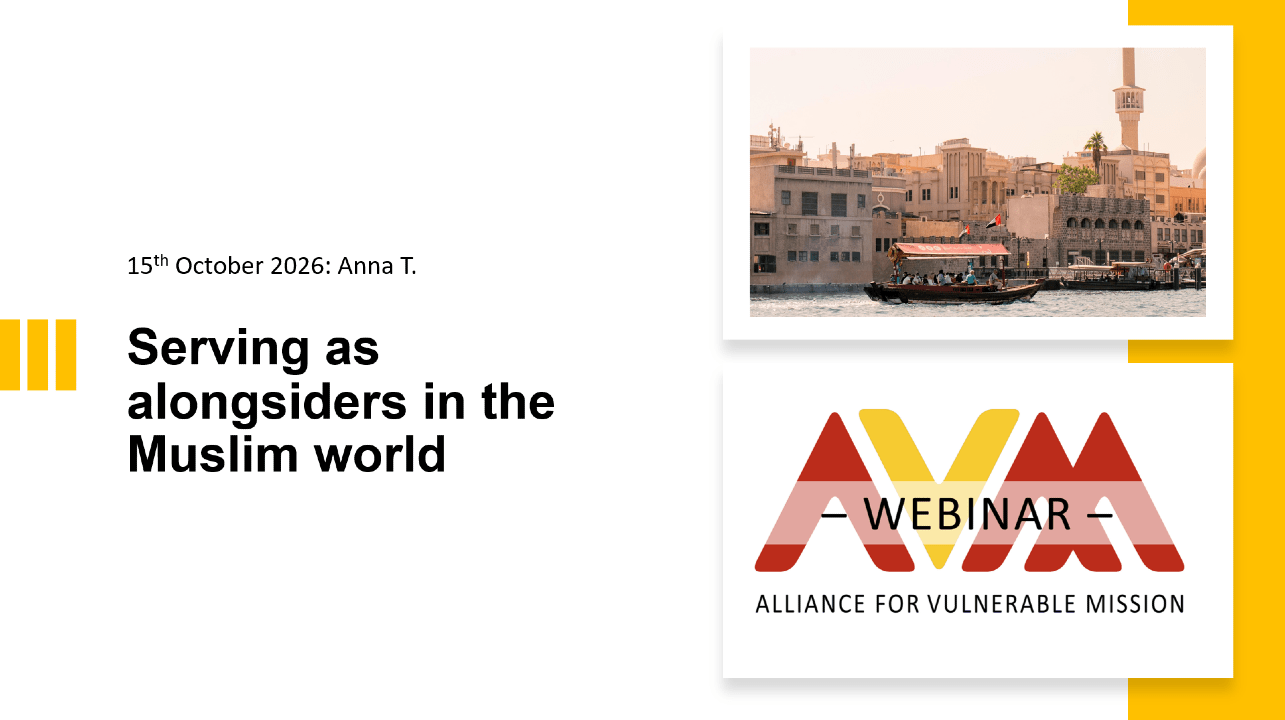
On 15th October 2026 at 14:00 Berlin time, Anna T. will be speaker at the upcoming AVM Webinar Serving as Alongsiders in the Muslim world: |
|
As Anna lived and served in the Muslim world with her family, it became clear that requiring a change of ‘religion’, or ‘conversion to Christianity’, was getting in the way of the good news. She will share her journey of how she and her husband developed the concept of alongsidering, as they explored different appropriate roles for those like themselves who came from outside to share the good news. They also developed the C-scale, which is a descriptive framework for understanding Christ-centered communities of faith and how they relate to the Muslim faith. |
|
|
| |
| |
|
| | Universities are sitting on a digital colonial time bomb |
|
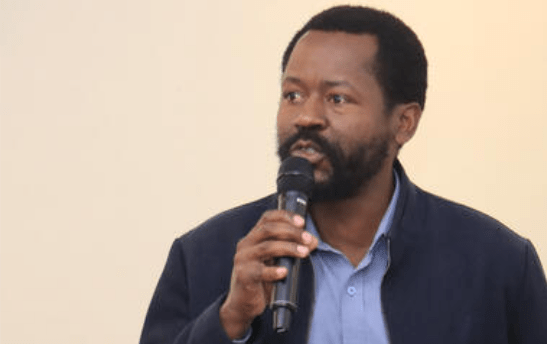
Contemporary digitalisation of African universities that enables them to instantly have access to massive libraries, has drawbacks, suggests Fred Otike. It means that whole programmes, departments, or even institutions, are dependent on someone else’s online provision, for a fee. If no fee is paid, the library disappears, and the university is sunk! (The term ‘sunk’ is the editor's term, and not that of Otike.) Before the digital age had advanced so far, at least African students were beginning to use books written by local authors, Otike points out. Now, much less likely. So, universities in Africa are becoming mere consumers of, rather than producers of, knowledge, Otike fears. AI, especially generative AI, renders the whole scenario much worse again. |
|
A comment from a VM perspective: books in indigenous languages would root knowledge locally even more effectively. At the same time, the challenges Africa faces in building effectively and sustainably on its own foundations are increasing even further. |
|
|
| |
| |
|
| | In Their Words – A Board Spotlight |
|
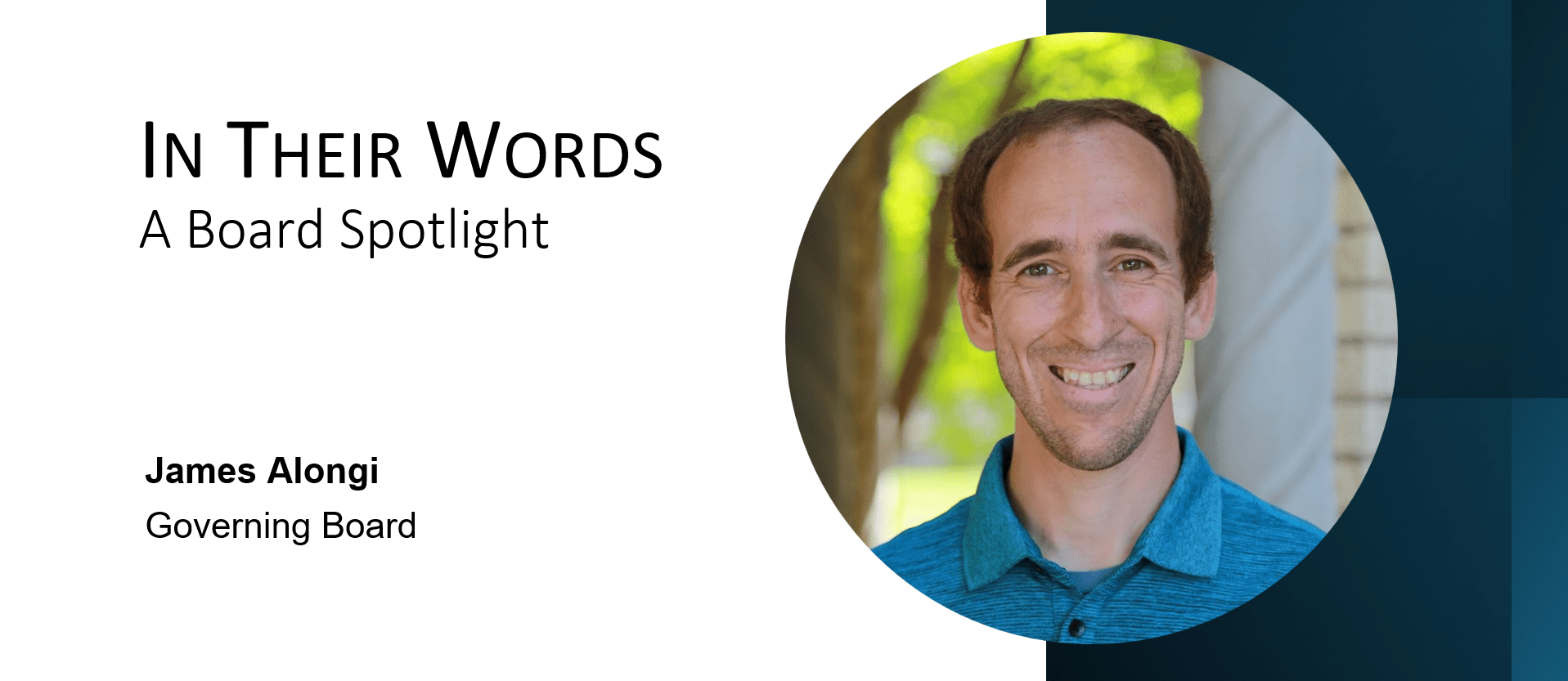
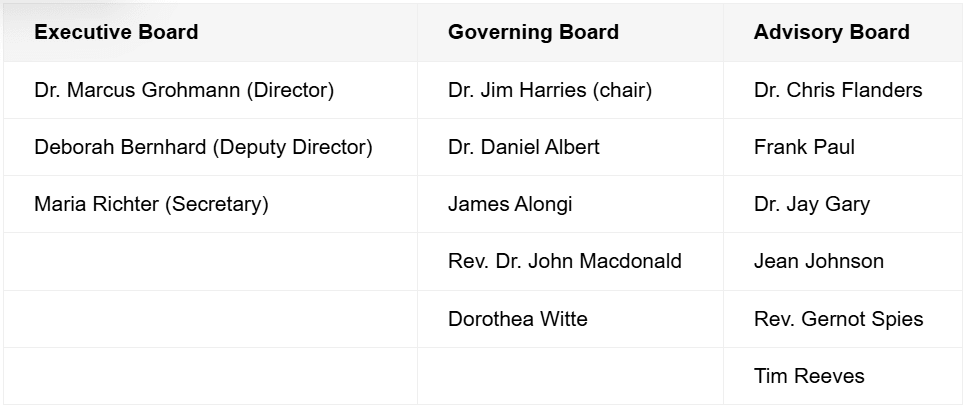
This continues a new series in the AVM Bulletin, designed to help readers get to know the people serving on the boards of the Alliance for Vulnerable Mission. This month we highlight a member of the governing board, James Alongi, ThM, who introduces himself in these words: |
|
James Alongi currently lives on the Navajo Nation territory in Arizona, USA while studying for a Ph.D in Old Testament through Dallas Theological Seminary. He previously graduated from DTS with a Th.M in New Testament and Intercultural Ministry, writing a Master's thesis on prayer, discipleship, and family in Luke 11:1-13. These topics have led him to his current research interests regarding the profound expressions in the Old Testament, especially when read in Hebrew, of ancient traditions about ancestors influencing all areas of knowledge and relationships. He hopes by means of these interests to communicate the universality of the Gospel as a message about God's Son and God's children. |
|
While his specific interest in Vulnerable Mission has been mostly academic, God was preparing James to engage such issues by years of working with children in schools and at Bible camp. Another important factor is his own story of coming to faith as a child, and realizing later that the death of Jesus remains the worst story he has heard (just like it sounded originally). He therefore believes that the transformation brought about by the resurrection of Jesus involves not only recognizing his holy power in one's own life, but also in that of others. Jesus overcomes not only sin and death in the lives of believers, but also various temptations that they face leading to the same, which are different in every culture. Even so, he thinks that both missiological and biblical Christian education ought to be communicated in a people’s own language and using their resources, so as to avoid dis-empowering congregations and pastors by subjecting them to perpetual foreignness. |
|
|
| |
| |
|
| | Childlikeness, Poverty, Language-Learning Strategies |
|
James Alongi with Jim Harries, have prepared a video that is to be made available to participants at this conference. The video articulates ‘wholistic’ language learning. That is, facilitation of language learning for missionaries that arises from a missionary’s putting themselves into a ‘vulnerable’ position in a language-speaking community. Specifically, it looks at vulnerability that arises from: celibacy, poverty, child-likeness, and ‘slavery’. It considers these in Biblical perspective. |
|
|
| |
| |
|
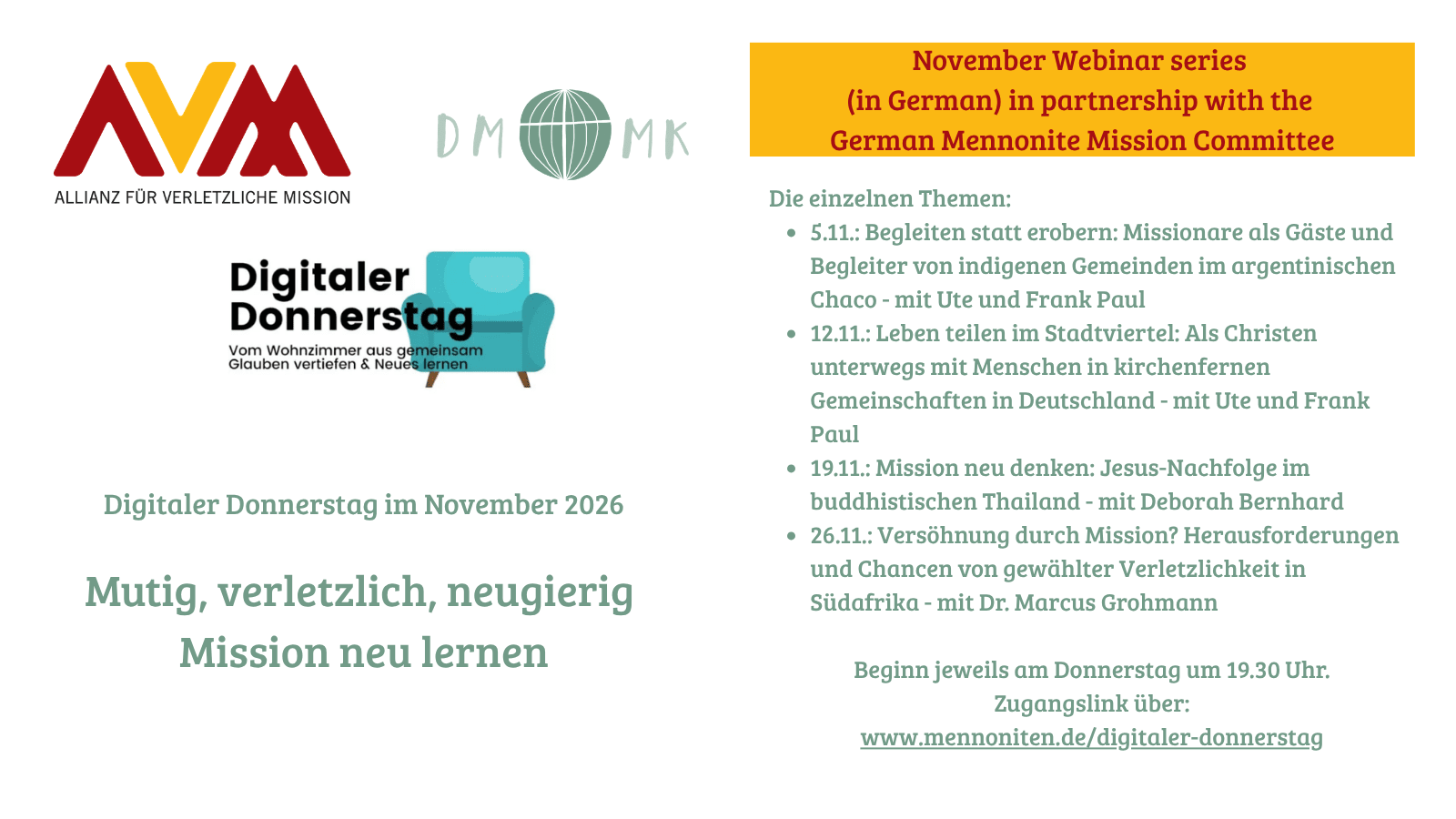
| | November: Digitaler Donnerstag zu Verletzlicher Mission – Webinar series in November in German |
|
The German Mennonite Mission Committee (Deutsches Mennonitisches Missionskomitee – DMMK) have invited the AVM to run a webinar series on each of the four Thursdays in November 2026. Topics will include “Mission as accompaniment in the Argentine Chaco”, “Incarnational mission among unchurched working-class people in Germany” (both with Ute and Frank Paul), “Rethinking mission in the Buddhist world” (Deborah Bernhard) as well as “Considering reconciliation through mission in South Africa” (Marcus Grohmann). |
|
Information on the individual webinar sessions and the Zoom link can be found here. |
|
|
| |
| |
|
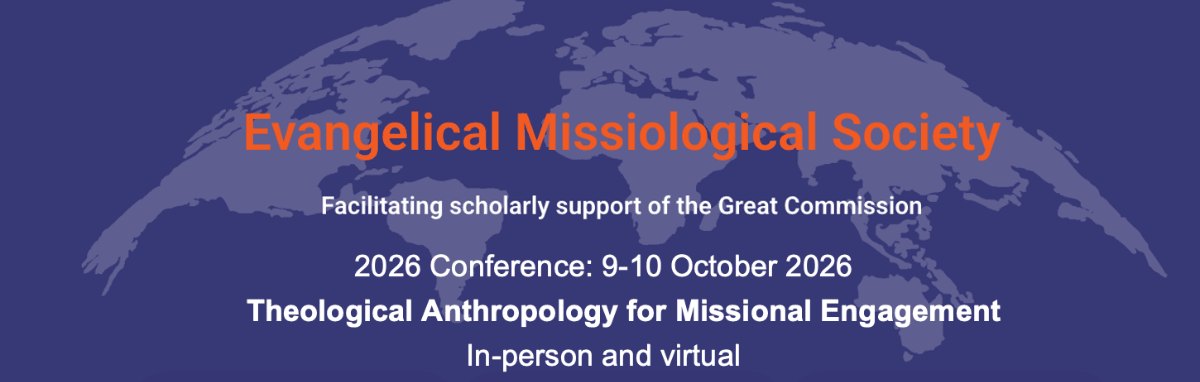
| | Evangelical Missiological Society 2026 |
|
Jim Harries will present a paper with the title "When African Cultural Contexts Adopt English: what happens?" (that also considers the relationship between anthropology and theology). Participation is encouraged! |
|
2026 CONFERENCE THEME:
Theological Anthropology for Missional Engagement |
|
October 9-10 2026
In-person and virtual |
|
This year’s theme “Theological Anthropology for Missional Engagement” is central to missiological reflection and practice, since acts of gospel witness, service, and cultural engagement all rest on assumptions about human identity, dignity, and destiny. In a rapidly changing world—marked by shifting views of spirituality, ethnicity, gender, technology, and ecology—the church must embrace a biblically faithful and missionally engaged understanding of the imago Dei. |
|
At the heart of this year’s theme is the exploration of Imago Dei in missional engagement—how human dignity, human rights, and gospel witness flow from being created in God’s image. This perspective grounds reflection on the meaning of being human and how the imago Dei shapes evangelism, discipleship, community, and global mission. |
|
|
| |
| |
|
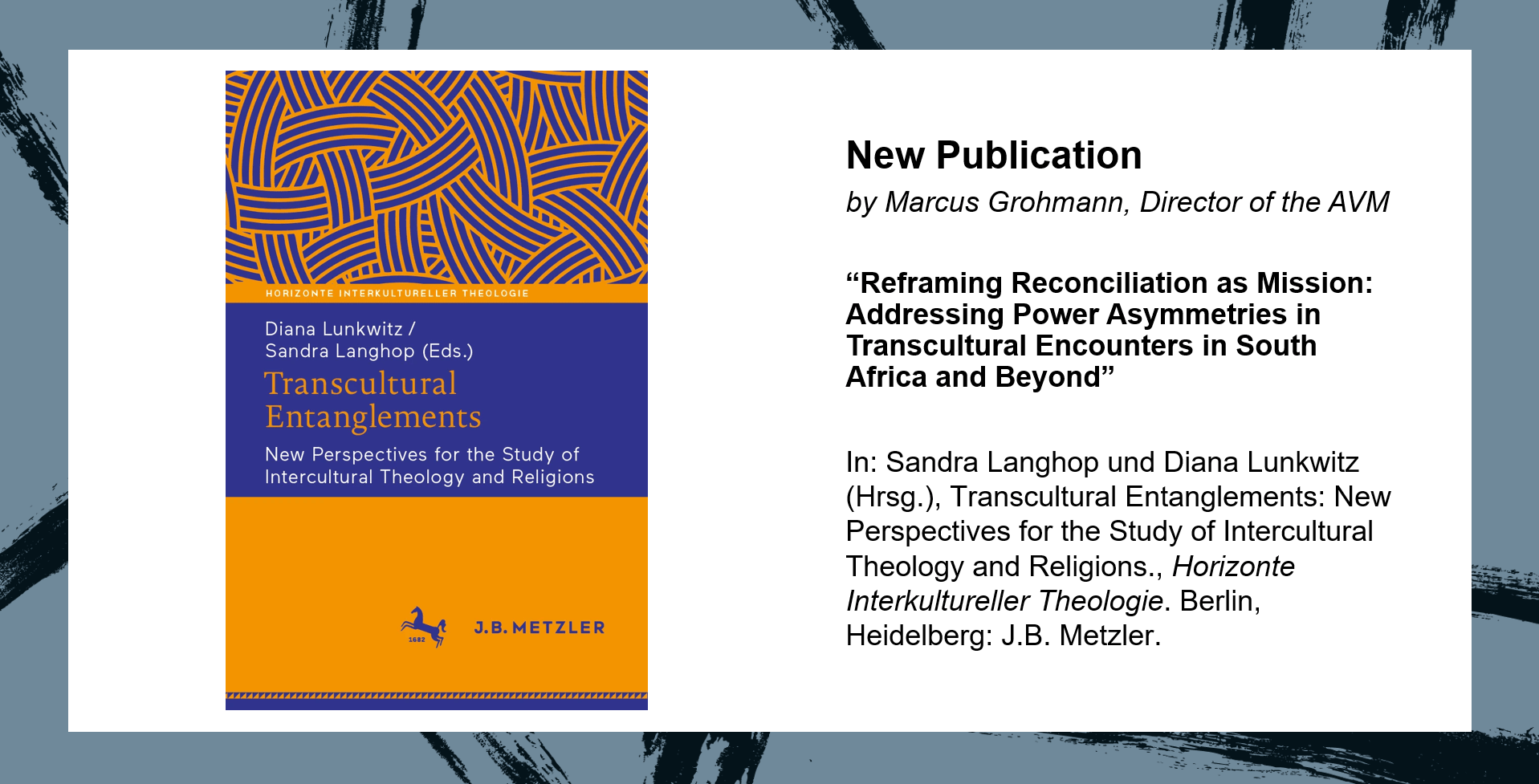
| | Reframing Reconciliation as Mission: Addressing Power Asymmetries in Transcultural Encounters in South Africa and Beyond |
|
Marcus Grohmann, director of the AVM (Alliance for Vulnerable Mission), builds on his PhD research in a church in South Africa in this highly academic and closely argued book chapter. Grohmann’s chapter pushes back against contemporary endeavours at assuming away cultural difference. Marcus’ careful study of translation in ecclesial contexts concludes that reconciliation should be seen as a kind of mission as it recognises its rootedness in particular beliefs and traditions. Central to this vision is the embodiment of the gospel message through a reimagination of mission: "Reconciliation as mission ... accentuates learning from and about others, in humility entering their epistemological worlds and gradually seeing the world through different traditions of knowing. Such an approach ... requires accepting (rather than inviting others to accept) epistemic and theological hospitality." (205) |
|
Full bibliographic reference: Grohmann, Marcus, 2026, ‘Reframing Reconciliation as Mission: Addressing Power Asymmetries in Transcultural Encounters in South Africa and Beyond’, 187-213 in: Lunkwitz, Diana and Langhop, Sandra, (eds) 2026, Transcultural Entanglements: new perspectives for the study of intercultural theology and religions. Heidelberg: J.B. Metzler publishers. DOI: https://doi.org/10.1007/978-3-662-73252-6 |
|
|
| |
| |
|
| | Poison and antidote: Decolonising citation in scholarship |
|
Eutychus Ngotho Gichuru and Archangel Byaruhanga Rukooko take academic citation to task. Examining published articles, they discover that African authors primarily cite Western scholars. The domination of global scholarship, in which African scholars are supposed to participate, by Western people, horrifies the authors of this piece. They want to encourage a transformation of the system from the inside. “We need African-centred indicators of research quality that evaluate community relevance, intergenerational knowledge transmission, and the application of values like Ubuntu, and require evidence of adherence to these values. Peer review must become, not a gatekeeping mechanism, but, instead, an engaged, scholarly process grounded in specific research and contexts. We suggest a three-tier system of review: international review (with >50% Africans), regional review (by Africans) and community review (by knowledgeable locals).” (Inclusion of a link to this article in this Bulletin does not imply affirmation of its conclusions by the AVM, but interest in this issue, that might be addressed through missionary vulnerability.) |
|
|
| |
| |
|
| | The AVM Bulletin is published by Allianz für Verletzliche Mission e. V. / Alliance for Vulnerable Mission (AVM), registered under Association Register Number 14892 by the local court in Dresden. The AVM is represented by executive board members Marcus Grohmann, Deborah Bernhard, and Maria Richter. Contact via phone (+27 81 586 1484) or email ([email protected]). |
|
By signing up for the AVM Bulletin, you agreed to our Privacy Policy. This includes receiving AVM-related news as well as the possibility of occasionally receiving direct fundraising requests. If you do not wish to receive such fundraising communications, please let us know via this link or by contacting us directly. Your subscription to the AVM Bulletin will not be affected. |
|
Mit der Anmeldung zum AVM Bulletin haben Sie unserer Datenschutzerklärung zugestimmt. Diese umfasst den Erhalt von AVM-bezogenen Nachrichten sowie die Möglichkeit gelegentlich direkte Spendenanfragen zu erhalten. Falls Sie keine solche Fundraising-Mitteilungen erhalten möchten, teilen Sie es uns bitte über diesen Link oder direkte Kontaktaufnahme mit. Der Bezug des AVM-Bulletins bleibt davon unberührt. |
|
Allianz für Verletzliche Mission e. V. Heynathsstr. 7, 01309 Dresden
Germany You received this email because you signed up for it. You can unsubscribe at any time. |
|
|
| |
| |
|
 |